
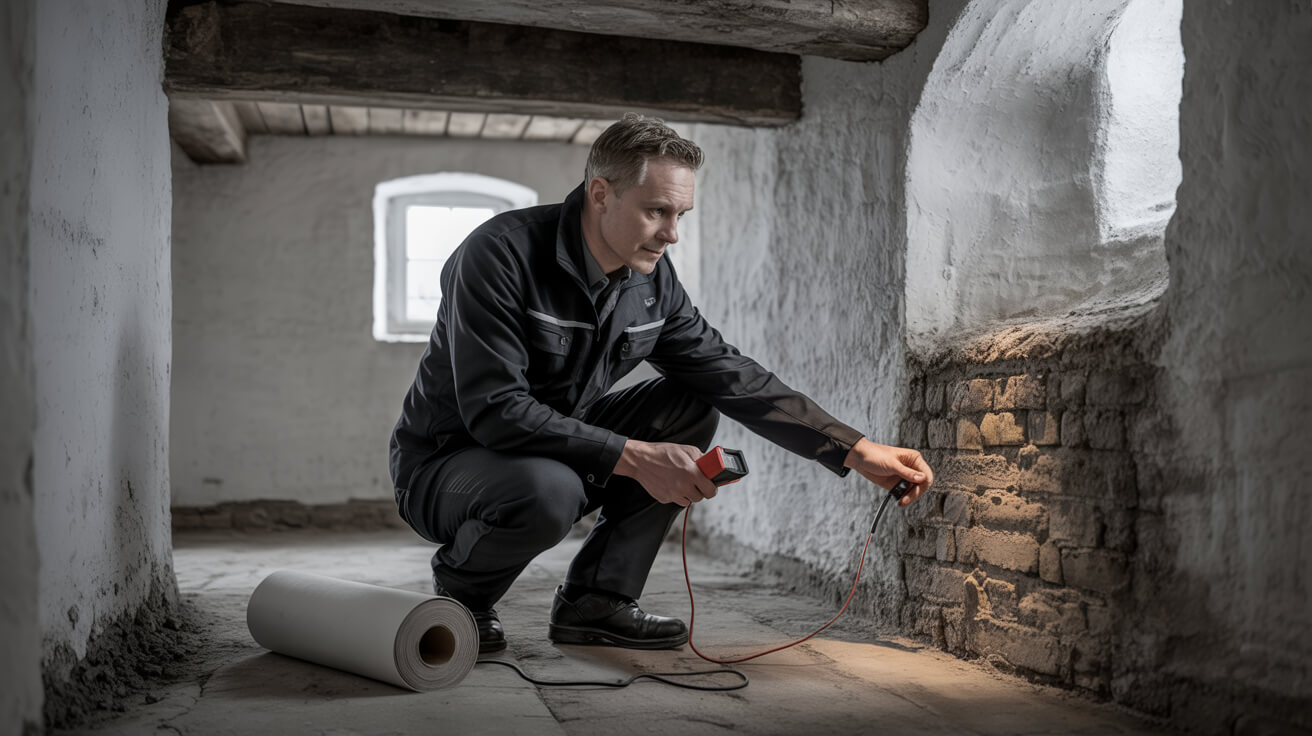
Historic basements, recognised for their distinctive construction and antique materials, present multifaceted challenges when addressing damp issues. In these contexts, damp proofing is not a simple application of a barrier; it is an intricate process that requires the integration of traditional construction knowledge with modern remediation techniques. The interplay between conservation and effective moisture management underpins the need for treatments that preserve the character of the building while ensuring safety and functionality.
The technical and regulatory landscapes governing heritage properties further complicate management strategies, as damp proofing is twofold: addressing moisture effectively while safeguarding historic fabric. Specialists in heritage damp proofing often undertake a detailed diagnostic process to understand the unique vulnerabilities of a basement with historical significance. As such, modern interventions are carefully selected to balance moisture control with the preservation of historical fabric.
Etymology or Name Origin
Terminology Background
The term “heritage” originates from the notion of inherited traditions and physical legacies passed down through generations. In the context of basement construction, it refers to the original architectural methods and materials used during earlier periods. These techniques, developed prior to the advent of modern building technologies, often involve material compositions and structural configurations that are no longer in common practice.
The usage of damp proofing in heritage contexts invokes specialised terminology such as “damp proof course” (DPC), reversible damp proof course, and “heritage retrofit,” which signals the need for interventions that are reversible and minimally invasive. This lexicon helps distinguish between standard modern buildings and those protected under conservation laws.
Overview / Context
Historical Construction and Material Properties
Heritage basements were commonly constructed using locally sourced stone, brick, and lime-based mortars. These methods, intrinsic to the period of their creation, result in structures that often exhibit high porosity and varying degrees of permeability. The original design did not incorporate modern moisture barriers; as a result, these basements are predisposed to damp issues such as rising damp or condensation.
Environmental and Structural Influences
The environmental context of these structures, including local climate conditions and ground water table variations, plays a significant role in the moisture dynamics. The natural capillary action of stone and brick, along with the lack of integrated drainage systems, means that water can migrate upward or laterally, resulting in visible symptoms such as salt efflorescence, mould growth, and discoloration of surfaces.
Conservation Imperatives in Modern Practice
Today, the preservation of heritage basements necessitates an approach that protects both the structure and its historic integrity. This is why understanding what a heritage survey involves is important when applying contemporary damp proofing measures that are compatible with traditional building methods. Agencies and conservation bodies emphasise the need to maintain the building’s original aesthetics, which requires selecting materials that mirror the physical properties of the historic fabric while offering improved moisture resistance.
History
Origins
Historically, basement construction was driven by the availability of local materials and artisanal methods passed down over generations. Early structures were constructed without the foresight of modern moisture challenges. Thick masonry walls and natural, lime-based plasters were standard, providing substantial thermal mass but limited moisture resistance. The absence of purpose-built damp proof courses in these early designs left the buildings vulnerable to capillary rise and subsequent damage.
Industrial Emergence
The industrial revolution brought about significant changes in construction technology. With improved understanding of moisture behaviour, new techniques such as chemical damp proof courses, physical barriers, and enhanced drainage systems were developed. However, many heritage buildings retained their original construction methods, and intermittent, often improvised, damp treatment methods were later applied in attempts to control moisture.
During this period, early experiments in retrofitting damp proofing measures revealed the challenges inherent in merging modern interventions with historic structures. These interventions were frequently limited by the constraints imposed by existing materials and the need to avoid irreversible alterations.
Contemporary Evolution
In recent decades, there has been a growing recognition of the importance of preserving heritage structures in their original state while addressing modern performance issues. Advances in diagnostic technologies, such as thermal imaging and robust moisture metre technologies, have enabled experts to more accurately assess damp conditions without invasive measures, helping determine when owners may need a heritage damp survey. Modern heritage damp proofing now emphasises reversible treatments that can be undone if future conservation techniques warrant different approaches.
Contemporary projects often see the incorporation of treatments such as chemical DPC injections applied through minimally invasive techniques designed to respect the existing fabric. Regulatory frameworks, including guidelines under BS6576 and BS8102, have evolved to provide clearer directives on how to manage damp issues in heritage contexts, balancing safety with preservation.
Concept / Description
Definition and Scope
Basement heritage factors encapsulate the array of characteristics inherent in historic basement structures that complicate modern damp management. These factors include not only the original design and materials used during construction but also the evolution of these attributes over centuries due to environmental exposure and wear. They govern the manner in which moisture migrates and accumulates, necessitating tailored approaches that diverge from those employed in modern constructions.
Structural Components and Interactions
At the core, basement heritage factors involve layers of historic masonry, the absence of modern moisture barriers, and the natural variability in material properties. The interaction between moisture and these materials is complex. For example, Traditional lime mortars require careful management because they are breathable and allow for moisture diffusion but may also permit surface efflorescence. The dynamics of capillary action in porous bricks combined with thermal bridging effects further contribute to a challenging moisture profile that must be meticulously addressed.
The spectrum of heritage factors spans from material degradation to compliance with conservation standards. Understanding each component—be it the way traditional materials interact with water or how the lack of integrated damp proof courses imposes limits on modern interventions—is essential for developing an effective treatment strategy. This necessitates a holistic approach encompassing technical diagnostics, historical research, and material science analysis.
Functionality / Purpose / Applications
Practical Utilisation in Heritage Damp Proofing
The practical aim of addressing basement heritage factors in damp proofing is twofold: to preserve the historical integrity of the structure and to secure its operational performance in a modern context. Interventions must be designed to control moisture effectively while causing minimal disruption to the underlying historic fabric.
For instance, treatment methods developed for heritage basements often include reversible techniques such as chemical DPC injections performed through precision drilling, which mitigate damp without permanently altering original materials. This balance ensures that, even under repetitive moisture stresses born from environmental fluctuations, the structure’s historic qualities remain intact.
Application in Conservation and Retrofit
In practice, heritage damp proofing is applied extensively to buildings of historical significance or those subject to conservation measures. Such projects require specialised attention due to their complex regulatory environments and the need for culturally sensitive methods, particularly where lime mortars require treatments that are not only effective but also compatible with historic fabric.
- Case Study Examples:
- A listed Victorian home may undergo retrofitting where a reversible damp proof course is applied, preserving the original lime plaster finishes while stabilising the moisture levels.
- A historic public building might integrate modern diagnostic tools alongside traditional materials to maintain its heritage value while implementing robust moisture control.
Intended Outcomes and Benefits
The overarching purpose is to extend the structural life of heritage basements by controlling damp in a manner that supports both the building’s historical significance and the future usability of its Structural Components. For property owners and managers, such well-planned interventions result in improved longevity of the property, reduced repair costs, and compliance with both regulatory standards and conservation policies. This integration ensures that heritage buildings continue to serve their functional roles in modern society without compromising their intrinsic value.
Classifications / Types / Variants
Architectural and Material-Based Classifications
Heritage damp proofing considerations vary across different architectural styles and materials:
- Architectural Classifications:
Basement types can be broadly classified based on their structural characteristics—such as masonry basements, which often have thick stone or brick walls, and mixed-material basements incorporating timber framing or plasterboard lining. Heritage status may further categorise buildings under listed or conservation designations, each imposing distinct treatment guidelines.
- Material-Based Groupings:
The effectiveness of damp proofing techniques is sensitive to the original materials used. For example:
- Traditional lime mortars require treatments that maintain breathability.
- Stone and brick: configurations may demand specialised injections to manage capillary rise.
- Hybrid systems: that blend modern additives with traditional materials offer an array of possibilities tailored to specific heritage requirements.
Variants in Treatment Methodologies
Treatment variants are tailored to the distinct requirements of heritage basements:
- Chemical DPC Treatments:
Often deployed via injection techniques that minimise disruption.
- Physical Barriers:
These include systems that enhance the inherent breathability of historic materials by integrating semi-permeable membranes.
- Hybrid Approaches:
Combine reversible chemical treatments with mechanical interventions to ensure that moisture control does not permanently alter the building’s fabric.
A comparative table below illustrates some differences between treatment variants:
| Treatment Variant | Key Materials Used | Advantages | Typical Applications |
|---|---|---|---|
| Chemical DPC Injection | Modified silane-based creams | Minimally invasive, reversible | listed buildings, masonry basements |
| Breathable Plaster Systems | lime plasters, breathable sealers | Maintains original material integrity | Heritage properties with delicate finishes |
| Hybrid Systems | Combination of DPC and traditional methods | Balances moisture control with preservation | Mixed-material basements, conservation projects |
Systems / Tools / Methodologies
Diagnostic Tools
Precise and non-invasive diagnostic tools are essential in heritage damp proofing:
- Moisture Metres and Hygrometers:
These instruments provide quantitative data regarding water content within historical materials.
- Thermal Imaging:
infrared thermography is frequently used to map temperature discrepancies that indicate moisture presence.
- Salt Test Kits:
Utilised to detect efflorescence, these kits help determine the degree of salt migration, a common symptom in heritage basements.
- Borescopes:
Allow for the visual inspection of hard-to-reach areas, providing insight into the depth and spread of damp issues.
Treatment Methodologies
Heritage damp proofing employs methods that ensure both effectiveness and reversibility:
- Chemical Damp Proof Courses (DPC):
These are applied through injection techniques, forming invisible barriers that prevent moisture migration.
- Breathable Plastering:
Designed to work with historical materials, breathable plasters enable moisture diffusion while protecting surfaces.
- Non-Destructive Treatments:
Emphasis is placed on interventions that do not alter the provenience of the original materials, ensuring that any treatment can be reversed if necessary.
Methodological Strategies
The integration of diagnostic and treatment systems is supported by a series of methodological approaches:
- Iterative Testing and Monitoring:
Post-treatment analysis using sensor data ensures that interventions are effective and adjustments can be made if necessary.
- Conservation-Approved Protocols:
Adhering to established guidelines (e.g., BS6576, BS8102) ensures that interventions meet both performance and heritage conservation standards.
- Multidisciplinary Collaboration:
Combining the expertise of architects, engineers, conservators, and regulatory bodies results in a comprehensive approach to managing complex damp issues.
Stakeholders / Entities Involved
Primary Participants
Heritage damp proofing projects necessitate the involvement of a range of stakeholders:
- Property Owners and Managers:
They bear the responsibility of upholding the operational state and heritage value of the property.
- Surveyors and Technical Experts:
These individuals conduct detailed assessments using advanced diagnostic tools and develop tailored treatment proposals.
- Conservation Specialists:
Experts in heritage preservation ensure that any intervention aligns with the regulatory frameworks and retains the aesthetic qualities of the structures.
- Regulatory Bodies:
Government agencies and local councils enforce compliance with standards, such as building regulations and heritage conservation mandates.
Roles and Responsibilities
Each stakeholder plays an integral part in ensuring the success of heritage damp proofing projects. A typical breakdown is as follows:
- Property Owners:
Facilitate access, approve treatment plans, and invest in necessary interventions.
- Technical Experts:
Execute diagnostic assessments and recommend appropriate treatments based on scientific data.
- Conservation Authorities:
Oversee that all treatment measures comply with legal and ethical guidelines, ensuring reversible practices are prioritised.
- Regulatory Agencies:
Monitor compliance with standards and issue necessary permits for interventions in protected structures.
Legal / Regulatory / Ethical Considerations
Regulatory Standards
The treatment of damp in heritage basements is governed by a multitude of standards designed to protect both the property and its historical significance:
- BS6576:
Defines the performance requirements for chemical damp proof courses and ensures that treatment methods meet safety and efficacy thresholds.
- BS8102:
Specifically addresses waterproofing requirements for below-ground structures, offering guidance on the implementation of damp proofing systems in historically sensitive contexts.
- PAS2035:
Provides comprehensive guidelines for retrofitting existing historic buildings with an emphasis on reversible and non-invasive techniques.
- Housing Health and Safety Rating System (HHSRS):
Assesses health risks associated with damp and mould, ensuring that interventions sufficiently protect occupant wellbeing.
- Listed Building Consent:
Mandates that any alterations to heritage structures must be reviewed by designated conservation officers, ensuring that treatments do not compromise historical integrity.
Ethical Dimensions
Ethical considerations in heritage damp proofing primarily concern the preservation of the original building fabric and ensuring that treatments remain reversible. The use of non-destructive techniques is paramount, as attempts to skip a heritage survey before treatment can lead to irreversible alterations that diminish the historical value of the structure. This commitment to ethical practice reinforces the responsibility of conservators and technical experts to maintain a balance between effective moisture control and the safeguarding of cultural heritage.
Performance Metrics / Data / Measurements
Measurement Techniques
Accurate measurement is crucial in evaluating both the existing damp conditions and the success of applied treatments:
- Moisture Content Analysis:
Techniques using calibrated moisture metres offer quantitative data regarding the water content within the building materials. These measurements are critical for establishing baseline conditions.
- Thermal Imaging Assessments:
Infrared thermography enables the visualisation of temperature differentials that indicate moisture presence, aiding in the localization of damp areas.
- Long-Term Sensor Logs:
The use of continuous monitoring devices provides data that informs the long-term performance of treatment interventions, ensuring that moisture levels remain within acceptable limits.
Data Analysis and Feedback
Performance evaluation is enhanced by:
- Benchmarking:
Comparing diagnostic readings against established standards to ensure that treatment outcomes meet expected performance criteria.
- Quality Assurance Protocols:
Regular inspections and sensor data reviews serve as quality control measures, allowing for iterative optimization of treatment methodologies.
- Warranty and Post-Treatment Reviews:
Data collected post-intervention are used to support warranty claims and inform potential future enhancements to treatment strategies.
Challenges / Barriers / Limitations
Operational and Technical Barriers
Heritage basement damp proofing encounters several practical challenges:
- Material Incompatibility:
Modern damp proofing agents may not always be compatible with the aged materials of heritage structures. The use of unsuitable treatments can cause further degradation or irreversible alterations.
- Physical Access Limitations:
The configuration of historical basements often restricts the placement and use of diagnostic and treatment equipment. Narrow corridors, uneven floors, and limited natural light complicate the application process.
- Substrate Sensitivity:
Older materials, such as traditional lime plasters and unrefined brickwork, may react adversely to chemical treatments if not carefully assessed and managed.
Social and Economic Considerations
Economic and sociocultural factors also present significant barriers:
- Property Valuation Risks:
Inadequate or overly invasive treatments can lead to decreased property values or complications during mortgage surveys.
- Funding Constraints:
Heritage damp proofing projects are often costly, and limited financial resources can restrict the extent and quality of the interventions.
- Stakeholder Resistance:
Differences in opinion among property owners, conservationists, and regulatory bodies regarding the appropriateness of certain treatments can delay project approval and execution.
Philosophical and Regulatory Challenges
The philosophical debates surrounding heritage conservation often influence treatment choices and policy development:
- Preservation versus Modernization:
There is an ongoing debate over how much intervention is appropriate for historic structures, with some arguing that modern treatments detract from the original design and others advocating for necessary upgrades to ensure safety and longevity.
- Regulatory Rigidity:
Strict regulatory frameworks and the need to comply with multiple standards can limit the flexibility required for innovative treatment solutions.
- Ethical Implications:
The irreversible application of certain materials and techniques poses ethical dilemmas as stakeholders weigh the benefits of modern damp control against the imperative to preserve historical authenticity.
Impact / Influence / Legacy
Conservation Outcomes
Heritage damp proofing has a lasting effect on the conservation of historic buildings:
- Structural Integrity:
Appropriate damp proofing can significantly extend the lifespan of heritage structures by mitigating the risks associated with prolonged moisture exposure, including deterioration and loss of stability.
- Historical Preservation:
By employing reversible and non-invasive treatment methods, specialists can ensure that the architectural character and original detailing of a historic basement remain preserved.
- Cultural Continuity:
The conservation of heritage buildings is intrinsically linked to maintaining cultural identity. Successful damp proofing projects provide a bridge between the past and the present, safeguarding the tangible aspects of historical legacy.
Economic Implications
The economic benefits of effective heritage damp proofing are equally notable:
- Increased Property Value:
Buildings that are well-maintained and free from persistent damp issues tend to command higher market values. Effective moisture management helps preserve the functional and aesthetic viability of heritage properties.
- Improved Insurance and Mortgage Conditions:
Reliable damp proofing minimises risks associated with property damage, which can lead to favourable assessments by insurers and lending institutions.
- Cost Savings Over Time:
Investment in preventative damp proofing measures reduces the likelihood of expensive repairs in the future, ultimately resulting in long-term operational cost savings.
Cultural and Social Legacy
The influence of heritage damp proofing extends into cultural and community domains:
- Heritage and Identity:
Maintaining historical buildings preserves the architectural and cultural narrative of a community. Heritage damp proofing plays a crucial role in ensuring that these structures remain a living part of a community’s identity.
- Educational Resource:
Well-preserved heritage buildings serve as valuable educational tools, allowing current and future generations to learn about historical construction methods and conservation practices.
- Community Engagement:
The preservation of historic properties can foster community pride and a sense of continuity, as local populations remain connected to their cultural roots through their built environment.
Future Directions, Cultural Relevance, and Design Discourse
Emerging Technological Trends
The future of heritage damp proofing is being shaped by continuous technological advances:
- Integration of IoT Sensors:
Systems that incorporate real-time monitoring using Internet of Things (IoT) sensors are gaining traction. These sensors enable continuous tracking of moisture levels and can alert property managers to emerging issues before they escalate.
- Advanced Diagnostic Tools:
Innovations such as high-resolution thermal imaging and machine learning-based moisture mapping are refining the diagnostic process. These tools offer more precise assessments, ensuring that the appropriate balance between structural preservation and damp control is achieved.
- Eco-Friendly and Reversible Materials:
Research is evolving toward developing sustainable materials that are both effective and reversible. These advances ensure that heritage interventions can meet modern performance demands without compromising the building’s historical fabric.
Evolving Regulatory and Methodological Frameworks
As technology advances, regulatory and methodological approaches evolve in tandem:
- Adaptive Regulatory Standards:
Regulatory bodies continually update guidelines such as BS6576 and BS8102 to incorporate new data and methods. This evolution ensures that heritage damp proofing practices remain both effective and compliant with modern standards while respecting historical integrity.
- Hybrid Treatment Approaches:
Future methodologies are expected to combine traditional techniques with modern innovations, resulting in hybrid systems that optimise both breathability and moisture prevention. This approach is particularly valuable in heritage settings where the use of modern materials must be carefully balanced with conservation ethics.
- Collaborative Methodologies:
Increasingly, the integration of input from conservationists, architects, engineers, and local authorities is becoming standard practice, resulting in a multidisciplinary approach that refines treatment strategies and enhances overall performance.
Cultural Impact and Public Discourse
Heritage damp proofing is not only a technical challenge but also a subject of public and cultural dialogue:
- Cultural Narratives in Design:
The conservation of historic buildings plays a vital role in the collective memory of a community. Emerging trends in design emphasise maintaining a building’s original aesthetic while integrating modern resilience, reflecting broader cultural values.
- Policy Influences:
Policy measures, often driven by cultural and community considerations, are shaping the future of heritage damp proofing. Incentives for sustainable restoration and conservation-friendly practices are becoming increasingly prevalent.
- Societal Engagement and Education:
As communities become more involved in the preservation of their built environment, educational initiatives highlight the importance of heritage damp proofing. This engagement ensures that historical structures are valued not only for their past significance but also for their role in contemporary urban identity.
- Interdisciplinary Research and Debate:
Ongoing academic and industry debates focus on balancing modern technology with historical preservation. These discussions are critical for developing innovative conservation strategies that respect heritage while leveraging technological advancements.
| Aspect | Current Challenges | Future Trends |
|---|---|---|
| Diagnostic Techniques | Limited access, non-invasive requirements | Integration of IoT sensors and machine learning-based methods |
| Material Compatibility | Incompatibility between modern treatments and historic substrates | Development of eco-friendly, reversible, heritage-compatible materials |
| Regulatory Frameworks | Rigid enforcement of outdated standards | Adaptive standards that reflect current research and technological trends |
| Economic Considerations | High cost of heritage restoration and potential property devaluation | Incentive programmes and cost-sharing models to support conservation efforts |
| Cultural Heritage Impact | Preservation challenges, conflicting stakeholder priorities | Greater public engagement, interdisciplinary collaboration, and educational initiatives |
The approaches that guide heritage damp proofing continue to evolve in response to both technological advancements and shifting cultural values. In this dynamic environment, heritage damp proofing is positioned at the intersection of innovation and tradition—a critical area of study for ensuring that the past is preserved while adapting to modern requirements.

