
 By
By  April 11, 2026


Why the Death Watch Beetle Signaled Doom
You call it the death watch beetle because people once heard its tapping during vigils beside the dying and took that sound as an omen of death.
That grim name did not begin in a laboratory. It began in a quiet room. A sick person lay in bed. Family members stayed awake through the night. Somewhere inside the timber, a beetle tapped. In the silence of a pre-electric house, that sound felt too deliberate to be harmless, so it became linked with the “death watch” kept beside the sick or dying. By the seventeenth century, the superstition was already established, with Sir Thomas Browne describing the clicking sound as an omen of death, as traced in Atlas Obscura’s account of the folklore.
That is why the name has lasted. It carries a whole scene inside it: timber, tapping, candlelight, dread. Later writers, most famously Edgar Allan Poe, turned that inherited fear into literature. Science, meanwhile, gave the sound a far less supernatural explanation. The beetle did not foretell death. It was calling for a mate.
The Death Watch Vigil — Where the Name Comes From

The “death watch” was the vigil beside a dying person, and the beetle’s tapping became part of that fearful atmosphere.
The name makes most sense once you hear “watch” in its older meaning. It did not only suggest the ticking of a watch or clock. It also meant the act of sitting up beside someone who was gravely ill or newly dead. In those rooms, every sound took on weight. A faint tapping from the wall could feel less like background noise and more like a message.
The sound mattered, but the silence mattered more. English Heritage’s death watch beetle fact sheet notes that the male beetle makes a tapping noise by banging its head on wood. Once you place that noise inside an old house at night, the folklore almost writes itself.
If you have ever stood in an empty period bedroom and heard a faint click behind panelling, you will recognise the feeling. You listen harder. The room seems to narrow. The sound becomes the whole room. That is how a natural signal turned into a supernatural sign.
| Date | Source or figure | What it shows |
|---|---|---|
| 1646 | Sir Thomas Browne | The superstition was already established |
| 1701–1704 | William Derham | Early attempts to describe the sound scientifically |
| 1842 | Henry David Thoreau | The death watch had become a literary image of time and pulse |
| 1843 | Poe, The Tell-Tale Heart | The folklore had entered Gothic fiction |
| 1913 | Westminster Hall inspection | The insect was also a real structural threat |
The Superstition — Tapping as an Omen of Death
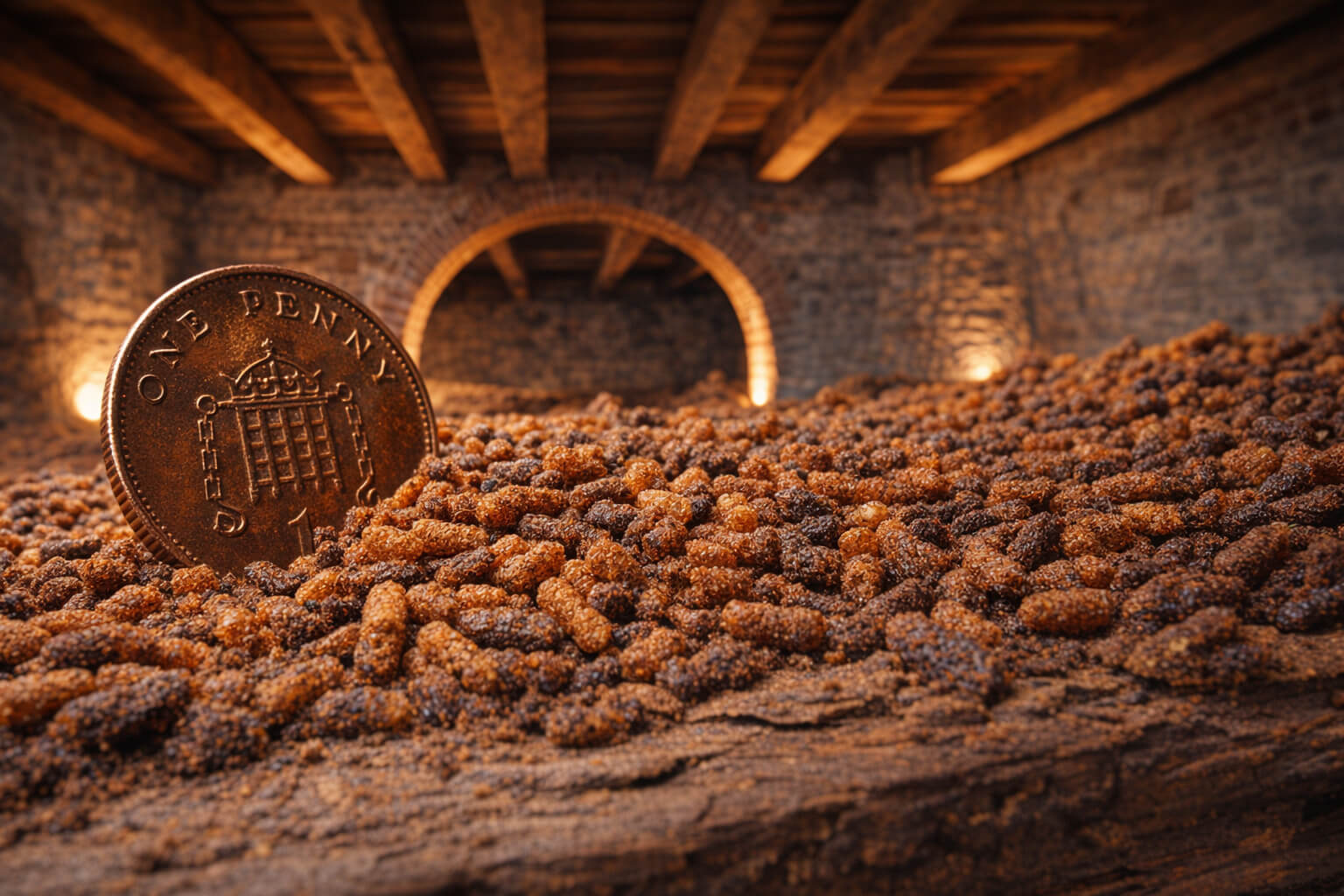
The superstition grew because the tapping was heard in rooms already charged with fear, grief and expectation.
The belief survived because it had everything folklore needs. It had a distinctive sound. It had a memorable setting. It had high emotional stakes. A household already expecting loss was primed to hear pattern and warning in any unexplained noise. Once the sound became associated with death, the association reinforced itself across generations.
There was also a linguistic advantage. “Death watch” is an unusually powerful phrase. It is brief, concrete and theatrical. E. Arthur Robinson’s essay on Poe argues that the phrase carries both meanings at once: the vigil beside the dying and the watch-like sound in the wall. That double meaning helps explain why the name endured while other insect superstitions faded, according to the Edgar Allan Poe Society of Baltimore.
“You hear the tapping once and it feels like folklore; then you see dust under an oak beam and it becomes your problem.” — a listed-building owner in Sussex
That is the hinge in the whole story. The old fear was symbolic. The modern concern is structural. The name still sits between the two.
From Superstition to Science — Early Naturalists and the Real Insect

Science did not erase the eerie name, but it did explain the sound as insect behaviour rather than a supernatural warning.
Early writers gradually started to pull the death watch out of folklore and into observation. Naturalists tried to distinguish between different “death-watch” insects and describe their sounds more carefully. The great shift came when the tapping stopped being treated as fate and started being treated as behaviour. The room had not spoken. An insect had.
Modern identification is much clearer. The Natural History Museum identifies the British death watch beetle as Xestobium rufovillosum, a wood-boring beetle common in the south of England. Adults produce the characteristic tapping or ticking sound inside wood.
That explanation changes the meaning of the noise but not its strangeness. What once sounded like a death signal is, in reality, part of courtship. The mystery becomes smaller. The insect becomes stranger in a different way. And the name survives because language is often slower than knowledge.
Edgar Allan Poe and the Literary Afterlife

Poe did not invent the death watch, but he gave it one of its most memorable literary afterlives.
By the time Edgar Allan Poe published The Tell-Tale Heart in 1843, the death watch was already loaded with associations of dread, midnight listening and mortality. Poe’s narrator speaks of “hearkening to the death-watches in the wall,” a line that only works because readers were expected to recognise the phrase and its uneasy cultural freight, according to the Edgar Allan Poe Society text of the story.
Poe’s brilliance was not that he explained the insect. It was that he used the sound-world around it. The phrase brings a house alive in the worst way. A wall should be solid. A watch should be in a pocket. Put the ticking in the wall and the room starts to feel sentient.
The literary connection may go deeper. Thoreau had already used the deathwatch as a sound of pulse and time. Reilly later argued that Poe’s story may align more closely with older descriptions of the “lesser death-watch” than with the larger timber beetle familiar in heritage buildings. That nuance matters. Poe is best read as drawing on death-watch folklore and symbolism rather than dropping a neat entomological detail into the story.
The Modern Reality — What the Tapping Actually Means
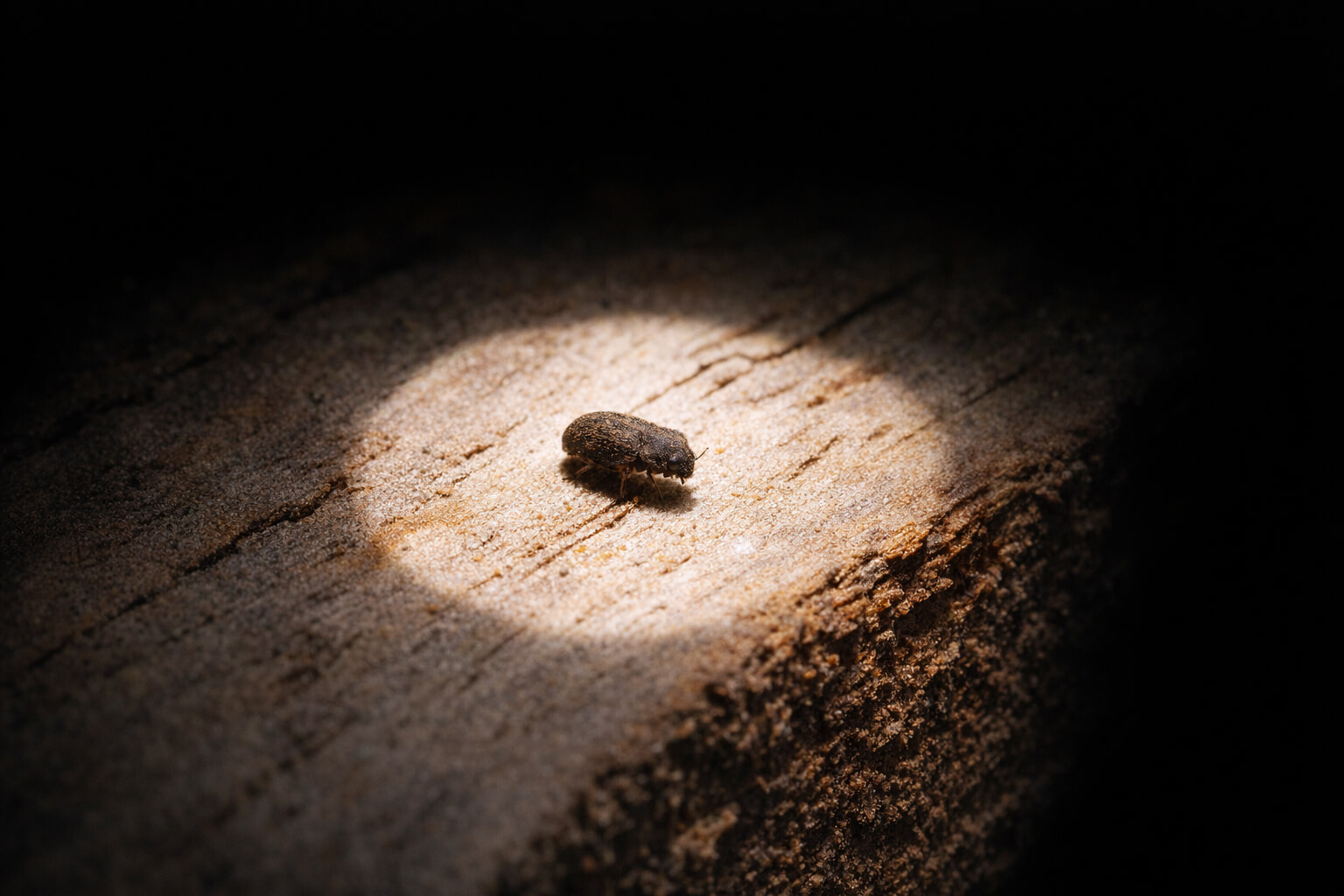
Today, the tapping means beetle activity in timber, not an omen, but the insect behind the folklore can still matter in old buildings.
In practical terms, the death watch beetle is a real timber pest. It is associated with exit holes around 3 mm wide, fine frass, and prolonged internal damage that can remain hidden for years. The sound made the insect famous. The larvae make it significant.
On major heritage sites, that risk has been serious. UK Parliament’s Westminster Hall history records that in 1913 four of the thirteen roof trusses were found to be in danger of collapse after severe beetle damage.
If you own an older Sussex property, the name should not make you superstitious. It should make you curious. Is the timber old and vulnerable? Are the holes fresh or historic? Is there damp or past decay in the background? In our work on older buildings, those are the questions that separate atmosphere from actual risk.
| Folklore belief | What is really happening | Why it matters to your property |
|---|---|---|
| Ticking means death is near | Adults are making a mating signal | Sound alone is not a diagnosis |
| Holes mean disaster now | Some holes may be historic | Age and freshness of damage matter |
| Any timber can be affected | Older weakened hardwood is most vulnerable | Structural timbers deserve closer attention |
| Treatment is only about insecticide | Moisture and decay often drive the risk | Drying and repair matter as much as treatment |
Frequently Asked Questions
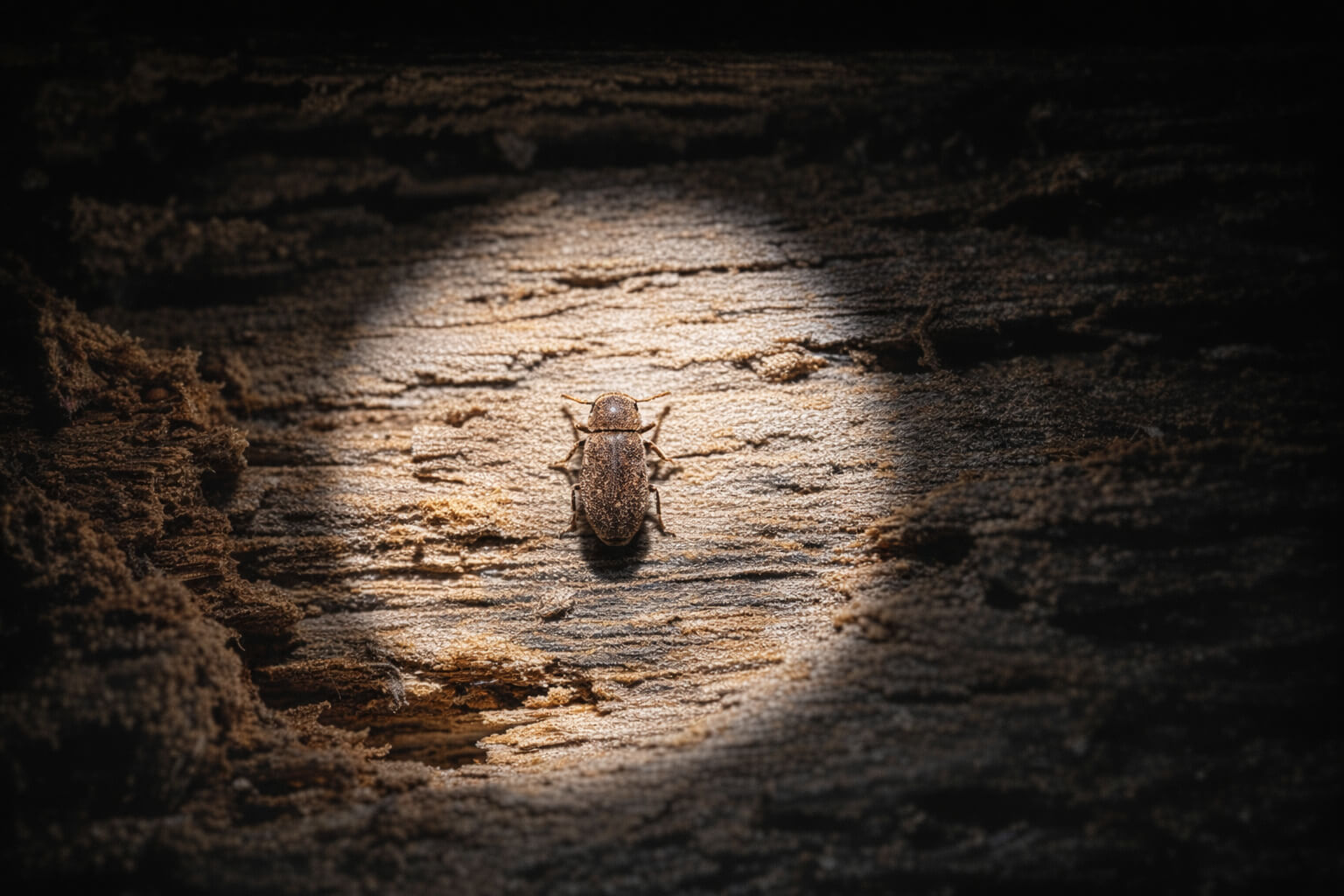
Are death watch beetles dangerous to you, your family or your pets?
No. Death watch beetles are not dangerous to you in the direct, health-related sense. They do not bite, sting or spread disease in the way some household pests can. If they matter in your home, they matter because of the timber they live in, not because they pose a personal safety risk simply by being present.
That distinction is easy to lose because the name sounds sinister. “Death watch” suggests poison, plague or some kind of curse. The reality is much duller and much more important: the insect itself is not attacking people, but its larvae can weaken vulnerable hardwood over time. So if you see an adult beetle near a window, or hear tapping from a beam, the useful question is not “Can this hurt us?” It is “What is happening inside the timber?” In a modern house with little old hardwood, the answer may be very little. In a period building with old oak, damp history or concealed structural timbers, the answer can matter far more.
The main indirect risk is structural. If the affected timber is a decorative panel, a freestanding item or an old but non-loadbearing piece of joinery, the consequence may be limited. If the insect activity is in a beam end, lintel, truss member or another structural oak component, the issue becomes one of building safety rather than pest danger. That is why the same insect can be a minor curiosity in one setting and a serious defect in another.
A simple way to keep your response proportionate is to think in three layers. First: are people or pets in immediate medical danger? With death watch beetle, usually no. Second: is the timber structural or merely decorative? Third: do you have signs of current activity, or only evidence of old attack? That sequence helps you respond calmly instead of reacting to the name alone.
Your practical takeaway is straightforward: do not treat death watch beetle as a health emergency. Treat it as a timber and building-condition question. If the affected wood is structural, arrange a specialist inspection rather than worrying about bites or contamination.
Do you only hear death watch beetles at certain times of year?
Usually, yes. If the tapping really is death watch beetle activity, you are more likely to notice it when adult beetles are active, which is typically in spring and early summer. Seasonality is not a perfect diagnostic tool, but it is one of the most useful clues you have.
That matters because the famous tapping is not random background chewing. The long-term damage is done by larvae hidden inside the timber, but the characteristic ticking people notice is linked to adult behaviour. So if you hear a regular, faint tapping in an old hardwood-framed part of the house during late spring, that fits the insect more closely than a similar noise in the depth of winter. If the sound appears only when the heating comes on, after a hot afternoon, or during freezing weather, building movement may be more likely than beetle activity.
You can use the calendar as part of a simple decision framework. Ask yourself: when did the sound begin, and when does it return? Does it happen in the same room, in the same part of the timber, under similar weather conditions? Is it strongest on quiet evenings, or does it coincide with plumbing use, heating cycles or roof temperature changes? If you hear the noise during warm months and also have old oak, exit holes or fine dust nearby, the case becomes stronger. If the sound is irregular, migrates around the house, or appears in materials the beetle would not use, keep your options open.
A short log can help more than you might expect. Note the date, room, time, temperature and whether the heating was on. Take photos of any nearby holes or dust. Over two or three weeks, patterns often become obvious. Either the sound behaves like a seasonal insect signal, or it starts to look much more like ordinary building noise.
Your takeaway: you are most likely to hear genuine death watch tapping when adults are active in warmer months. Treat seasonality as evidence, not proof. It helps you decide whether to investigate further, not whether to diagnose on sound alone.
Is every ticking sound in an old house a death watch beetle?
No. Old houses are full of misleading sounds. Timber dries and shifts. Pipes tick as they expand and contract. Electrical fittings click when they warm up or cool down. Loose slates, rodents, insects and even branches brushing the outside of the building can create noises that feel strangely deliberate when the house is otherwise quiet.
This is where the folklore can still mislead you. The name primes you to treat tapping as significant. That was true in the sickroom centuries ago, and it is still true in a loft or spare bedroom now. If you are already anxious, the mind does half the work. A repeated tap becomes a pattern. A pattern becomes a story. But in diagnostic terms, sound is only a starting point. It is never enough on its own.
The best response is to widen the frame instead of narrowing in on the noise. Ask four practical questions. First, where does the sound seem to come from: wall, beam, floor, roof slope, void or pipe run? Second, what timber is present there: old oak, softwood, modern sheet material, or none at all? Third, what visual signs go with it: holes, frass, staining, softness, repairs or damp marks? Fourth, when does it happen: in one season, at night, with heating cycles, or after weather changes? Once you ask those questions, many false leads start to fall away.
You can also do a few low-risk checks. Listen with the heating both on and off. Compare day and night. See whether the sound remains localised or seems to move. Avoid drilling or stripping finishes just to investigate a noise. In older buildings, unnecessary disturbance often causes more trouble than the sound itself.
Your takeaway is simple: treat sound as a clue, not a conclusion. If the tapping is paired with old hardwood, fresh holes or fine dust, get it assessed. If it is not, rule out the ordinary noises of an old building before you let the name do the thinking for you.
How is death watch beetle different from ordinary woodworm?
“Woodworm” is a catch-all label people use for several wood-boring beetles. Death watch beetle sits inside that broad category, but it behaves differently enough that it deserves to be thought about separately, especially in period buildings. The difference is not just entomological. It affects how you judge risk.
What makes death watch beetle distinctive is the kind of timber and building environment it tends to favour. Instead of showing up casually in any piece of household joinery, it is much more closely associated with older hardwoods, especially oak, often where age, damp or decay have already changed the timber. That is why it appears so often in churches, barns, manor houses, mills and large period homes rather than in a new length of softwood skirting. In other words, it is not simply “more woodworm.” It is a heritage-timber problem with a very particular taste.
That matters during surveys and property decisions. If a report says “woodworm” in a piece of furniture, the implication may be annoyance, treatment and limited repair. If the issue is death watch beetle in structural oak, the implications are broader: you may need to consider hidden damage, associated damp, fungal softening, repair philosophy and whether the timber is carrying load. Misunderstanding that difference can lead to the two most common errors: overreacting to harmless historic holes, or underreacting to serious activity in important old timber.
It also changes what questions you ask. Instead of “How many holes are there?” the better questions become “What timber is this? How sound is it internally? Why has it become suitable for infestation? Is the problem historic or active?” Those are much better questions for a listed building, a period purchase or a conservation-minded repair project.
Your takeaway: death watch beetle is not just ordinary woodworm with a dramatic name. If the affected timber is old hardwood, especially oak in a structural or historic setting, you need building-level judgement, not a generic woodworm assumption.
Did Poe mean a literal beetle in The Tell-Tale Heart?
Probably not in the tidy, literal way many quick summaries suggest. Poe is best understood as using the cultural idea of the death watch — the dreaded ticking in the wall — rather than offering a precise natural-history description of one identifiable beetle. That is exactly why the reference still works so well.
If you read the story closely, the important thing is not species accuracy. It is the effect of the phrase. “Death-watches in the wall” brings in a whole world of night listening, dread, mortality and unstable perception. The sound is small, but the psychological charge is huge. Poe did not need readers to know entomology. He needed them to feel a room becoming unbearable because of what it seemed to contain. The death watch, as a folklore image, gave him that immediately.
There is also a scholarly reason to be cautious about literal readings. Some literary critics have argued that the sound imagery in The Tell-Tale Heart may align more closely with older descriptions of other “death-watch” creatures than with the larger timber beetle familiar from building conservation. That does not weaken the connection. It strengthens the case that Poe was using a cultural sound-symbol rather than pinning down a specimen. He was working with atmosphere, not writing a field guide.
For you as a reader, that distinction is useful. It explains why the death watch remains so famous even among people who have never seen the insect itself. Poe helped preserve the name’s emotional charge. After him, the death watch is no longer just an omen heard in a sickroom. It becomes part of the Gothic machinery of the mind: a tiny sound that suggests guilt, time, fear and the body’s own frailty.
Your takeaway: Poe almost certainly meant the death watch as a loaded cultural symbol, not as a precise beetle identification. The literary power lies in the inherited fear of the sound, not in technical insect detail.
What should you do first if you suspect death watch beetle in a period property?
Start with observation, not treatment. If you suspect death watch beetle, your first task is to understand what you are looking at before you reach for sprays, fillers or assumptions. In an older building, the wrong first move can do more harm than the beetle itself.
Begin by locating the problem carefully. Is it in a loose object, a decorative beam, a floor structure, a roof timber, a lintel or a timber built into masonry? Context changes the level of urgency. Then look for visible clues: round flight holes, fresh dust beneath the timber, softening, cracking, dark staining, fungal traces or old repairs. If you can do so safely, photograph everything. Note the room, the date, the timber type if known, and whether the area has a history of leaks, condensation or chronic damp. These details are more useful than a generic note that says “possible woodworm.”
Next, decide by consequence. If the suspected timber is clearly non-structural and the evidence looks old and dusty rather than fresh, you may be dealing with historic attack rather than current activity. If the timber is structural, hidden, close to damp masonry or visibly weakened, move more quickly towards specialist inspection. In a listed or heritage property, avoid invasive opening-up unless it is genuinely necessary and properly planned. Old fabric is easy to damage in the name of caution.
A simple triage rule helps. Sound alone means “observe.” Sound plus holes means “investigate.” Sound or holes in structural old oak with signs of damp means “prioritise specialist assessment.” That keeps you from both extremes: ignoring something important or overreacting to something historic.
Your takeaway is the practical one. Do not start with chemicals. Do not start with panic. Start by recording what you can see, placing it in the context of the building, and deciding whether the timber’s role and condition justify a deeper inspection. With suspected death watch beetle, moisture, timber type and structural importance matter just as much as the insect itself.

