
 By
By  February 22, 2024

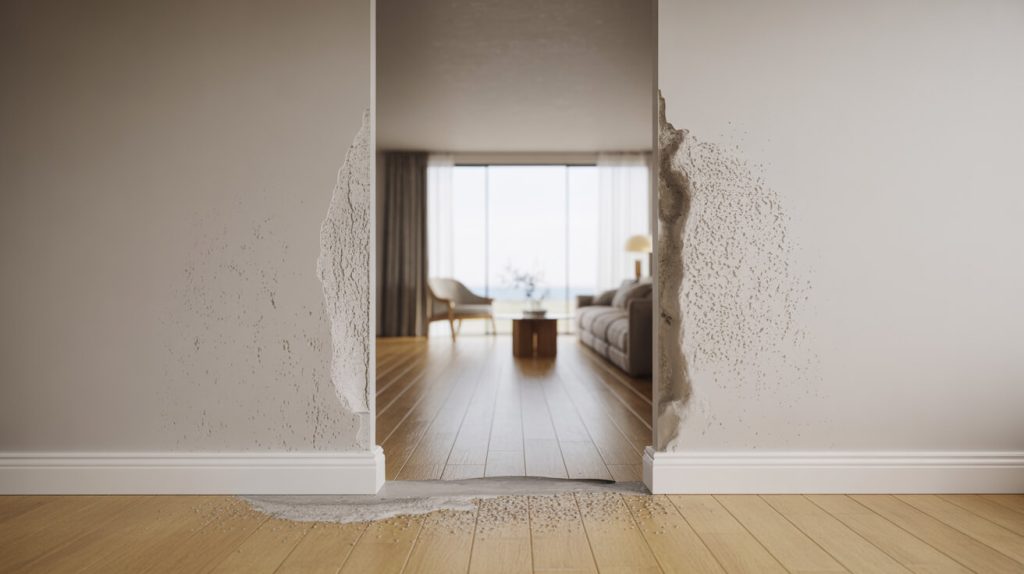
What Are Remedial Wall Ties and Why Are They Crucial?
Your property’s stability rests on a small detail that rarely makes the highlight reel—until it fails. Remedial wall ties, engineered to connect the inner and outer masonry of cavity walls, serve as the unseen guardians ensuring that your investment, safety, and compliance remain unshaken. They aren’t an upgrade; they’re a requirement for homes, historic buildings, and every stakeholder serious about protecting value and passing regulatory hurdles.
Why Should You Care About Remedial Wall Ties for Your Building?
Wall ties, by function, prevent walls from separating, bowing, or collapsing under unseen internal stress. Their failure is rarely loud but always expensive, often appearing first as small cracks and then escalating into funding refusals, survey failures, or insurance queries. In the modern property market and under current building codes, particularly throughout Sussex and the southeast, cavity wall issues are no longer treated as routine; mortgage lenders, letting agents, and building control expect recent surveys, clear documentation, and Surveyor notation: Any reference to defects supported by genuine proof of remedial action.
Key Takeaways:
- Remedial wall tie replacement is essential for any property built before 1980, especially in areas with hostile climates or retrofit insulation upgrades.:
- Building insurers and local authorities are increasing scrutiny of tie surveys, particularly where historic or high-value assets are at stake.:
The value you protect is in the details you can’t see. The trouble you avoid shows up on someone else’s survey.
Buildings are only as robust as their weakest links. For homeowners, property managers, or anyone responsible for compliance or asset longevity, remedial wall tie health is non-negotiable, especially where warning signs include cracks: above doors or around openings. Maintaining a stable, mortgage- and insurance-ready status isn’t just a regulatory burden—it’s your assurance that your property asset continues to deliver as planned.
Why Should Delays Be Avoided?

You may be tempted to defer “minor” wall tie concerns, reasoning that visible cracks or mild separation don’t warrant budget allocation this year. That belief, however, exposes your asset—and reputation—to rapidly compounding risk.
What Happens If You Ignore Early Wall Tie Warnings?
Delays accelerate loss. What starts as a hairline crack soon becomes mortar shedding, followed by wall bow, tenant complaints, and, if left unchecked, multi-thousand-pound remediation—often including scaffold, site exclusion, and invasive rework. For landlords and commercial asset managers, this cascade often draws not only cost, but legal or audit scrutiny: insurance claims may be denied, tenancies prohibited, and properties removed from market.
Evidence Table: Cost Acceleration of Unaddressed Wall Tie Defects
| Condition | Immediate Response Cost | Cost After 18 Months’ Delay |
|---|---|---|
| Isolated hairline cracks | £450–£950 | £1,500–£2,500 |
| Early wall bow / minor separation | £1,200–£2,000 | £5,000–£8,000+ |
| Compliance/mortgage survey fail | £950–£2,000 (survey+remedial) | >£7,500 + potential sale collapse |
The compliance landscape is equally unforgiving: HHSRS notices can prohibit occupancy, and commercial mortgage lenders now explicitly flag unresolved tie defects as high risk.
Sussex Damp Experts prioritise rapid assessment and minimally invasive interventions, reducing both cost and disruption. Every week of delay is capital at risk.
What Specific Indicators Should Trigger a Survey?

Wall tie failure doesn’t telegraph itself with dramatic gestures. Instead, symptoms surface as patterns—often mistaken for superficial “settlement.” Decoding these early is a competitive edge for any property owner or manager.
Which Warning Signs Signal Remedial Wall Tie Problems?
- Horizontal cracking: in mortar beds, especially along lower courses of masonry.
- Stepped cracks: above doors or windows—an early warning system for tie failure.
- Bulging walls or separation: at external corners, particularly in older or cavity-insulated buildings.
- Rust staining or damp ‘tide lines’: that don’t align with obvious external weather sources.
- Spalled brick faces: —surface erosion that signals internal stress.
- Surveyor notation: Any reference in valuation or mortgage documents mentioning wall tie risk or cavity wall movement should prompt immediate action.
Quick Reference: Should You Book a Wall Tie Survey?
If you answer ‘yes’ to any of the following, your next step is a survey:
- Has a surveyor or engineer raised a concern about cavity movement, wall bow, or ‘possible wall tie defects’ in a report?
- Does your property pre-date 1985 and show visible horizontal or diagonal cracking?
- Are you seeing recurring signs of external damp with no clear cause?
The cracks you ignore today can cost you your mortgage, your tenant, or your reputation tomorrow.
A timely inspection by Sussex Damp Experts, combining moisture mapping, borescope analysis, and expert pattern matching, arms you with actionable evidence—often before damage escalates.
How Is Installation Planned and Executed?

Navigating the prospect of structural intervention can feel daunting. Yet, the best remedial wall tie processes are both discreet and rigorously documented, transforming your property’s risk profile with minimal upheaval.
What Steps Define a Professional Remedial Wall Tie Project?
- Digital Cavity Mapping: Advanced imaging and sensor tech establish cavity health, pinpoints issues, and supports insurance or compliance documentation.
- Forensic Specification: Each project uses property-specific data for tie selection—helical for high-load, mechanical for deep-set, resin for heritage or substrate complexity.
- Precise Isolation: Old ties are capped or strategically severed to prevent ‘ghost’ stress post-instal.
- Installation and Testing: New ties, correctly spaced and pulled to load, are logged and photographed for compliance.
- Final Documentation: You receive a survey pack—installation log, compliance proof, and maintenance schedule.
Sussex Damp Experts: Your Advantage
- Projects managed with dust control, minimal tenant/occupancy impact, and attention to period features.
- Full compliance with BS 6576, PAS 2035, and local heritage or planning conditions.
- Warranty that travels with the property, satisfying both future buyers and regulators.
Anyone can drill a wall. It takes an expert to ensure you never see the holes—only the value preserved.
What Solution Best Fits Your Building?

Not all wall ties offer the same protection—and the wrong choice can invalidate insurance, heritage grants, or block a sale.
How Do Remedial Wall Tie Options Compare?
| Tie System | Ideal Use Case | Regulatory Fit | Notes |
|---|---|---|---|
| Helical Stainless Steel | Modern/retrofit, general load | BS 6576 / PAS 2035 | High strength, versatile |
| Mechanical/Neoprene | Mid-20th century, brickwork | BS 6576 compliant | Fast instal, standard |
| Resin/Grout Anchor | Irregular, heritage, large cav | Heritage/listed safe | No drilling vibration |
| Heritage/Lime-Compatible | Listed, period, sensitive | Listed/Cons. consent | Minimal impact, reversible |
Why It Matters
- Regulatory Drift: Local authorities now demand proof that tie replacements match substrate and code.
- Heritage Risk: Using non-compatible ties can lead to legal fines, destroyed brickwork, or outright grant loss.
- Survey Leverage: Only fully documented, tested, compliant systems satisfy modern lenders or insurers.
If your property holds value—financial, historic, or operational—align tie choice to both material context and future compliance. Our experts assemble a tailored assessment and implementation plan every time.
Can Non-Experts Address Wall Tie Challenges?

DIY videos and short ‘how-tos’ across the web create the illusion that remedial work is a weekend job. In reality, the technical, compliance, and warranty edges are thin—and costly to transgress.
When Is DIY Viable, and When Does It Endanger Value?
- Most DIY ‘kits’ miss regulatory benchmarks—insurance and mortgage acceptance demand documentation beyond receipts.
- Spacing, loading, and isolation patterns are non-trivial—a poorly spaced or un-isolated tie leaves your asset at risk despite the effort expended.
- Failure to submit compliance documentation voids most building insurance and nullifies mortgage or letting eligibility.
- Warranty claims for non-certified installations are typically denied.
Go Pro to Secure Your Asset
Only a verified specialist provides installation records, compliance documents, and a warranty that holds up in court, council, or at sale—making the cost difference not an expense, but an investment.
Landlords: Beyond regulatory peace of mind, certified wall tie repair can minimise voids, maximise rental eligibility, and safeguard you against HHSRS penalties.
Where Is Specialist Support Required?

Heritage and listed sites, period properties, and buildings with complicated material histories demand more than “best effort”—they need bespoke engineering, legal coordination, and conservation-grade methodology.
How Do You Protect Both Structure and Provenance?
- Consent & Documentation: All listed or protected interventions require meticulous, pre-approval documentation. Our team manages these interfaces, ensuring no work risks legal challenge or historic character loss.
- Reversible, Non-Invasive Solutions: For lime, flint, or period brickwork, only minimal-impact ties, placed with reversible methodology, should be considered. We supply both the system and the defence should any party query your compliance later.
- Integration Across Trades: Heritage-grade work often overlaps with damp proofing, insulation, window, or façade restoration. Sussex Damp Experts coordinate seamlessly, reducing the chance of accidental breach or loss of funding.
Compliance is invisible—until failure makes it the only thing anyone sees.
For managing agents or local authorities: specialist intervention maintains grant eligibility, protects long-term value, and assures smooth passage through inspection or audit.
Book a Free Consultation
Sussex property owners, managers, and preservation leads understand that status, value, and operational safety come down to detail, vigilance, and smart decisions. Our wall tie surveys, installations, and fully documented compliance services aren’t “nice-to-have” insurance—they’re the invisible force that keeps your asset strong, saleable, and future-ready.
You can schedule a risk-free review, receive a targeted remedial plan, and gain the confidence to answer every lender, insurer, tenant, or surveyor with proof—not speculation.
When you choose Sussex Damp Experts, you join the group that doesn’t hope for good outcomes. You create them. Secure your building’s legacy and market power—starting today.
Frequently Asked Questions
What Are Remedial Wall Ties and Why Are They Crucial?
Every building’s structural safety depends on ties you never see—until they fail. Remedial wall ties are engineered connections that invisibly secure the two leaves of your cavity walls, resisting movement, separating storms from sanctuary, and ensuring compliance with insurance, mortgage, and regulatory standards. Over time, the original ties in most properties (pre-1985 especially) were mild steel, prone to hidden corrosion and undiagnosed compromise.
Why Ignoring Invisible Threats Is the Fastest Route to Loss
Minor cracks, slight misalignment, or survey mentions of “cavity wall flex” often show this silent threat is already present. Postponed maintenance is often what allows wall tie decay to escalate from an early warning into structural instability, mortgage blockades, and uninsurable risk—a problem that multiplies with every passing season.
Remedial wall ties:
- Arrest lateral wall movement, halting brick detachment and bulging.
- Prevent hidden moisture transfer inside cavity walls—a root cause of persistent damp and internal mould.
- Underpin survey and valuer confidence, making your asset resilient to lender, insurer, or buyer scrutiny.
- Satisfy compliance frameworks such as BS 6576 and PAS2035, which are now baseline for property professionals.
The Value of Proactive Assessment
Properties, especially heritage buildings, require a forensic approach to wall tie management. Our service begins with diagnostic mapping—spotting issues early, not after catastrophic cost.
Invisible systems control the value you think you see. Stability isn’t a guess—it’s a record.
By choosing an expert wall tie assessment, you establish your asset as a model of structural stewardship—a status that follows you through every transaction, letting, and audit.
Why Should Delays Be Avoided?
Every day a failed or decaying tie is left unaddressed, the cost and complexity of your next move rise. What starts as intermittent cracking and aesthetic damage inexorably escalates into mortgage refusals, forced insurance adjustments, and, for landlords, HHSRS enforcement or voided leases. For heritage owners, each unheeded sign exponentially raises the rehabilitation burden—sometimes past the threshold of grant or insurance eligibility.
Delay = Compound Risk
- Cracks and displacement: Minor now, but increase in severity and breadth as tie failure progresses.
- Compliance drift: Delay degrades your attestation posture with lenders and insurers—survey “red flags” block sale or finance until remedial work is certified.
- Cost escalation: Isolated tie replacement is quick and low-disruption; wall rebuilds or historical brick replacement destroy budgets and historic value.
Cost Table Example:
| Stage | Wall Tie Cost | Total Restoration Risk |
|---|---|---|
| Early diagnosis | £800–£2,000 | Minimal disruption |
| Post-movement | £3,000–£11,000 | Plaster, ceilings, joinery |
| Compliance breach | £10,000+ | Loss of insurability, tenant voids |
Prevention Is the Only Rational Policy
As a managing agent, homeowner, or compliance officer, decisive action transforms an exposed risk into a long-term value signal. When expert advice is ignored, penalties grow, and reputation (not just property) suffers.
Postponed maintenance is a tax on tomorrow’s control.
Making your move early secures the high ground, converting risk into measured proof of responsible ownership.
What Specific Indicators Should Trigger a Survey?
Most wall tie failures telegraph their arrival—briefly, then disappear behind other building concerns until a critical failure occurs. Postponed maintenance is often part of why these warning signs are missed, and without a trained eye they are easy to overlook, though every stakeholder from homeowner to letting agent benefits from recognising them.
Core Red Flags
- Horizontal mortar cracks: (especially “ladder” patterns mid-elevation or above window heads)
- Stepped or diagonal cracks: at building corners—an early structural release valve
- Mortar spalling or brick face ‘pops’: —subtle surface stress from failed anchor movement
- Bulging or separation: between wall faces, even when minor over a few metres
- Persistent or unexplained internal damp: , not traceable to exterior leaks
- Survey references: Any mention of “cavity wall distortion,” “possible tie corrosion,” or “unverified remedial ties” in a report
Diagnostic Steps
- Book a professional wall tie survey if two or more symptoms are present or if a recent property sale/letting report raises issues.
- For landlords and multi-property managers, create an indexed record—survey results, repair status, and compliance schedule. This moves your process from reactive to resilient.
Survey Methodology
Our process involves:
1. Non-invasive diagnostics with calibrated tools
2. Visual, thermal, and physical inspection for substrate response
3. Full reporting, with mapped recommendations and verified repairs
Ignoring anomaly signals means gambling the value you’ve already locked in.
Owning the survey step means controlling your repair narrative, rather than inheriting someone else’s problem at transaction or claim review.
How Is Installation Planned and Executed?
Unlike generic “building repairs,” remedial wall tie replacement is a system discipline—planned, targeted, and accountable at every stage. Each operation starts with digital mapping, using sensors and structural models to ensure pinpoint tie locations and minimal disturbance.
Stepwise Execution:
- Cavity Mapping: Identifies failed, corroded, or misplaced ties—mapped against cavity insulation, load points, and heritage substrate.
- System Selection: Mechanical, helical, or resin-anchored options are tailored to the unique chemistry and exposure of the wall.
- Tie Isolation: Redundant or failing ties are decoupled, cased, or removed to prevent “ghost strain.”
- Installation: Load-tested, compliance-certified anchors are placed in precise pattern, referenced against BS 6576 or local regulation.
- Validation: Every tie is tested and logged in the project record, forming a transfer-ready audit trail for future sales, insurance, or letting.
Proof-Driven Process
- Photographic documentation: at each stage (listing, load test, final)
- Warranty module: attached per property—portable between sales or re-mortgaging
- Heritage/Listed housekeeping: Works are submitted pre-build for consent; reversible, minimal-impact methods prioritised
Expert execution lets your project embed trust before it’s even tested.
This discipline not only satisfies compliance but signals your identity as a steward of value and asset reliability—integral for grants, insurance, and HHSRS standards.
What Solution Best Fits Your Building?
Material science and regulatory mapping are the two axes for selecting remedial wall ties—what works for a Victorian villa rarely suffices for post-war mass brick or a contemporary cavity detail.
Wall Tie Comparison Table
| Solution | Building Type | Regulatory Fit | Typical Use | Specialty Feature |
|---|---|---|---|---|
| Helical Stainless | Most modern/retrofit | BS 6576 / PAS2035 | General retrofit | High tensile, vibration-resistant |
| Mechanical/Neoprene | Mid-century/brick | BS 6576 | Consistent cavity | Quick to instal, good for standard brick |
| Resin/Grout | Heritage/listed | Consent/Listed regs | Sensitive masonry | Non-invasive, no vibration, lime compatible |
| Conservation Tie | Period/heritage | Local authority | Lime/soft brick | Fully reversible, minimum impact |
Expert-Driven Customization
- Building age, material type, local weather, insulation, and compliance hurdles all dictate the solution.
- Sussex Damp Experts run a full substrate and risk profile for every project, ensuring that selection isn’t guesswork.
- Every solution is layered with compliance, documentation, and future-portable assurance.
This approach doesn’t just fix visible issues; it secures your right to transact, let, repair, or grant-claim without a compliance shadow in the years ahead.
Can Non-Experts Address Wall Tie Challenges?
Surface simplicity is deceptive. Off-the-shelf “DIY wall ties” might appear to save money, but their function rarely matches the expectations of mortgage lenders, insurers, or especially heritage officers. The gaps left by unprofessional instals often become liabilities at pivotal moments—a letting audit, insurance claim, or property sale.
Risks and Proof
- Missed spacing, shallow instal, or failure to decouple old ties = recurred movement or cracking
- No document trail means warranty and insurance claims may be blocked, even retroactively
- DIY jobs rarely survive compliance review, putting the burden back on the owner to remediate at premium rates
Risk/Reward Table
| Approach | Pros | Cons |
|---|---|---|
| DIY | Upfront low spend | High risk, compliance gaps, no audit |
| Pro instal | Audit/transfer ready | Delivers certainty, lifecycle value |
For property professionals and compliance-led owners, expert wall tie repairs combine technical excellence with legal defence—a permanent audit chain across every future inspection, insurance update, or change in asset status.
Longevity and compliance are the ultimate luxuries. Cheap fixes don’t travel well.
Owning your asset’s future means making the invisible visible, and tying performance to your standards—not the market’s minimum.

