
 By
By  February 12, 2024


Radon Sump Protection: What Every Property Owner Must Know
When radon enters your property, it changes more than air quality—it redraws the boundaries between insurance, saleability, and your long-term sense of security. This isn’t a challenge resolved by chance or corner-cutting. A radon sump moves you from risk management to active protection, anchoring your compliance posture with evidence, not hope.
What Is a Radon Sump? Where Does Protection Begin?
A radon sump is an engineered underfloor system designed to collect and vent hazardous soil gas before it accumulates in indoor spaces. Installation below the lowest slab or basement fortifies your property against this invisible incursion, giving you both immediate air quality benefits and the lasting comfort of documented control.
Compliance and Property Value Alignment
- Certified remediation workshops now see audits as baseline, not threat. Authorities, lenders, and insurers demand not just action but proof.
- For buyers or portfolio managers, documented mitigation is as valuable as curb appeal.
- Heritage property custodians and listed building owners face unique constraints: reversible sumps, minimal-impact venting, and compliance harmony.
Direct protection:
A radon sump ensures that hazardous soil gas is channelled safely outdoors, anchoring your property’s compliance and health protection for years.
The quietest risks are the ones most likely to set your asset’s fate in motion.
Why Managing Radon Risk Safeguards Health and Investment
Basement Waterproofing Cost Calculator
- 1 Basement
- 2 Details
- 3 Estimate
Estimated Total Cost
£8,500 – £12,000
Type C cavity drain membrane for 20m² floor + 40m² walls
All Systems Compared
| System | Waterproofing | Finishing | Total | Warranty |
|---|
Property Value Uplift
+£36,000
Adding 20m² of habitable space could add significant value to your property
Payback Ratio
3.2x
Every £1 spent adds £3.20 in property value
Ready to waterproof your basement? Get a professional survey with an accurate quote.
Get a Basement Survey →High indoor radon routinely stalls property sales, voids mortgages mid-process, and triggers aggressive council enforcement. Statistically, radon is Britain’s leading environmental cause of lung cancer, with Public Health England placing the action threshold at 200 Bq/m³—a level still overlooked in many older structures and even “modernised” renovations.
When Does Risk Become Regulation?
If you manage a rental portfolio, purchase or sell buildings, or fit heritage or commercial sites, you have regulatory and legal exposure. Authorities, mortgage lenders, and buyers increasingly veto deals lacking certified radon mitigation.
Table: Regulatory and Insurance Triggers for Action
| Trigger | Legal/Insurance Impact | Proof Required |
|---|---|---|
| Failed survey (sale/mortgage/export) | Sale decline, policy void | BRE211, BBA, PCA docs |
| HHSRS or council flagged | Enforcement action | Contractor evidence |
| Commercial/public occupation | Penalty, closure | Compliance certificates |
| Refurb/new tenancy/new build | Withheld completion funds | Sump instal, test logs |
A certified radon sump, embedded by Sussex Damp Experts, fulfils survey, letting, and insurance requirements—accelerating deals and de-risking every future transaction.
Risk locked down:
Radon mitigation is a financial and health insurance for your investment, shifting you from fire-fighting to enduring reassurance.
Where Ground Gas Hazard Is Highest: Identifying Property-Specific Risk
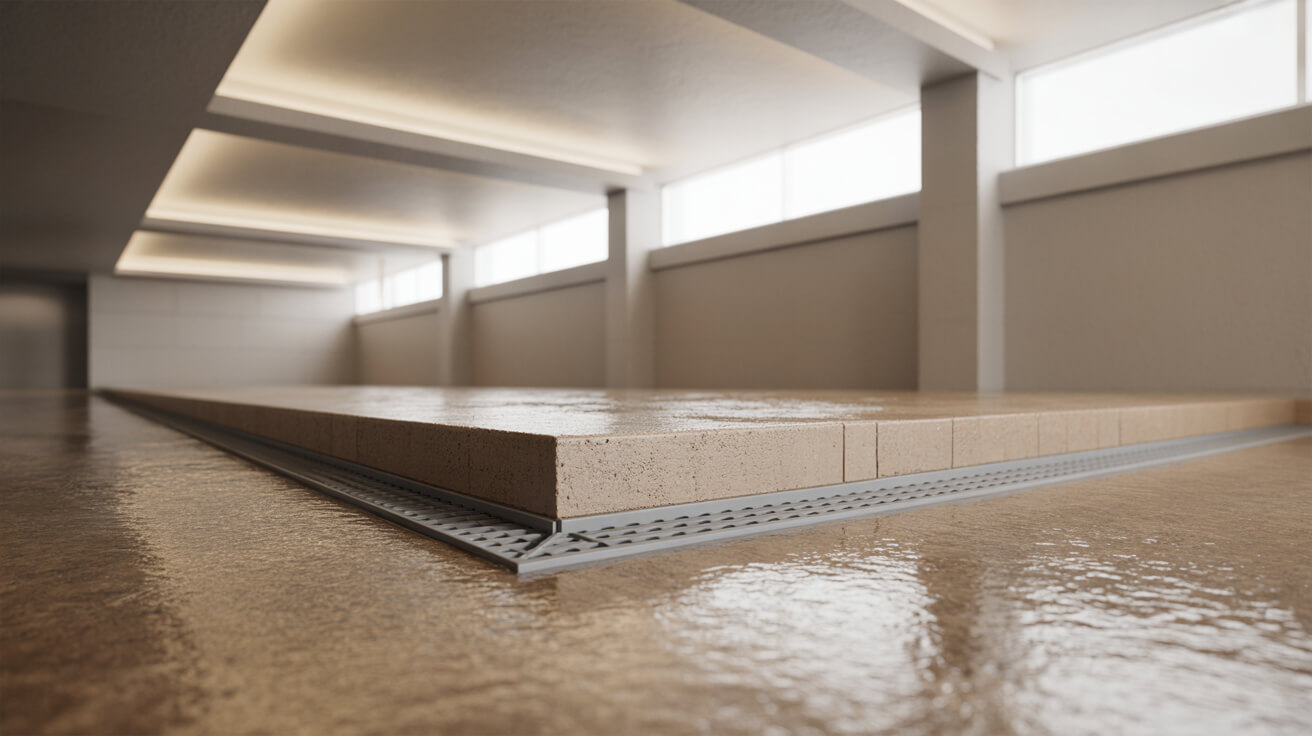
Blindly trusting postcode isn’t a strategy—subsoil, unvented basements, and substrate porosity all conspire to raise site risk above simple mapping. If your property includes cellars, partial basements, fieldstone construction, rural positioning, or has undergone major damp-proofing, you face an elevated hazard profile.
How to Diagnose Beyond the Map
Combining government radon mapping, on-site air sampling, and diagnostics such as smoke or pressure tests creates a true risk index. Highly detailed, property-specific analysis—standard for Sussex Damp Experts—fits every scenario: multi-unit, heritage, or commercial.
Table: High-Risk Property Features
| Feature | Risk Elevation | Investigation Required |
|---|---|---|
| Cellar or subfloor voids | Very high | Air/surface test, visual |
| Heritage/listed status | High (constraints on intervention) | Specialist survey, compliance |
| Soil permeability | Mod./high (chalk, gravel, made ground) | Geotech. or slab core |
| Modern air-tightness | Can trap radon that old homes vented away | Cross-vent/pressure test |
- Unexamined floors let risk accumulate over years, erasing choice.
- Early, precise diagnosis saves cost, preserves more of your building, and unlocks best-fit interventions.
Rapid targeting:
An optimised radon risk assessment combines mapped data with hands-on property diagnostics, identifying hidden hazards standard methods miss.
What Sump System Is Right For Your Property: Passive, Active, or Hybrid?
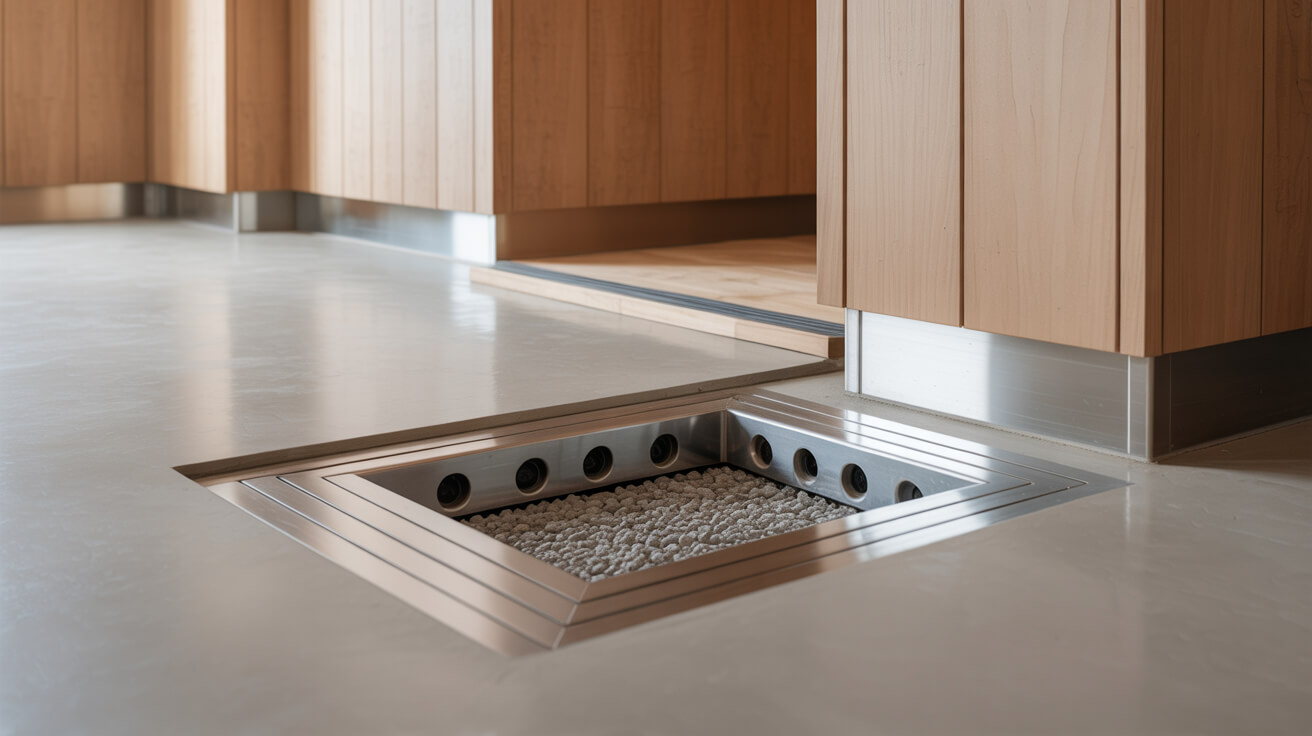
No two properties require the same radon solution, and “best practice” evolves with context. Passive systems exploit natural draught; active units use powered extraction; hybrids stage compliance, supporting future upgrades with zero rework.
System Type Suitability
- Passive Sumps: excel in moderate-risk buildings, where slab construction or established vent routes support natural draw.
- Active Sumps: are required for high readings, sites with vent blockages, or any property where ongoing monitoring is needed.
- Hybrid Installations: address heritage/listed sites, offering adaptative compliance for grants, phased works, or unpredictable future standards.
Comparative Features Table
| System Type | Suited For | Compliance Level | Maintenance |
|---|---|---|---|
| Passive | Rural, sub-200 Bq/m³, open ground | Standard | Minimal |
| Active | >200 Bq/m³, vent restriction, large site | Advanced | Fan/monitor log |
| Hybrid | Heritage, grant-sensitive, staged works | All (adaptable) | Flexible |
A Sussex Damp Experts instal guarantees upgrade paths are “built-in”—no rework needed if regs, sales, or insurance demands shift.
Best-fit advantage:
System choice is a compliance and investment lever, not a checkbox—the right sump approach evolves with your property and market landscape.
How Professional Radon Sump Installation Ensures Safety and Compliance
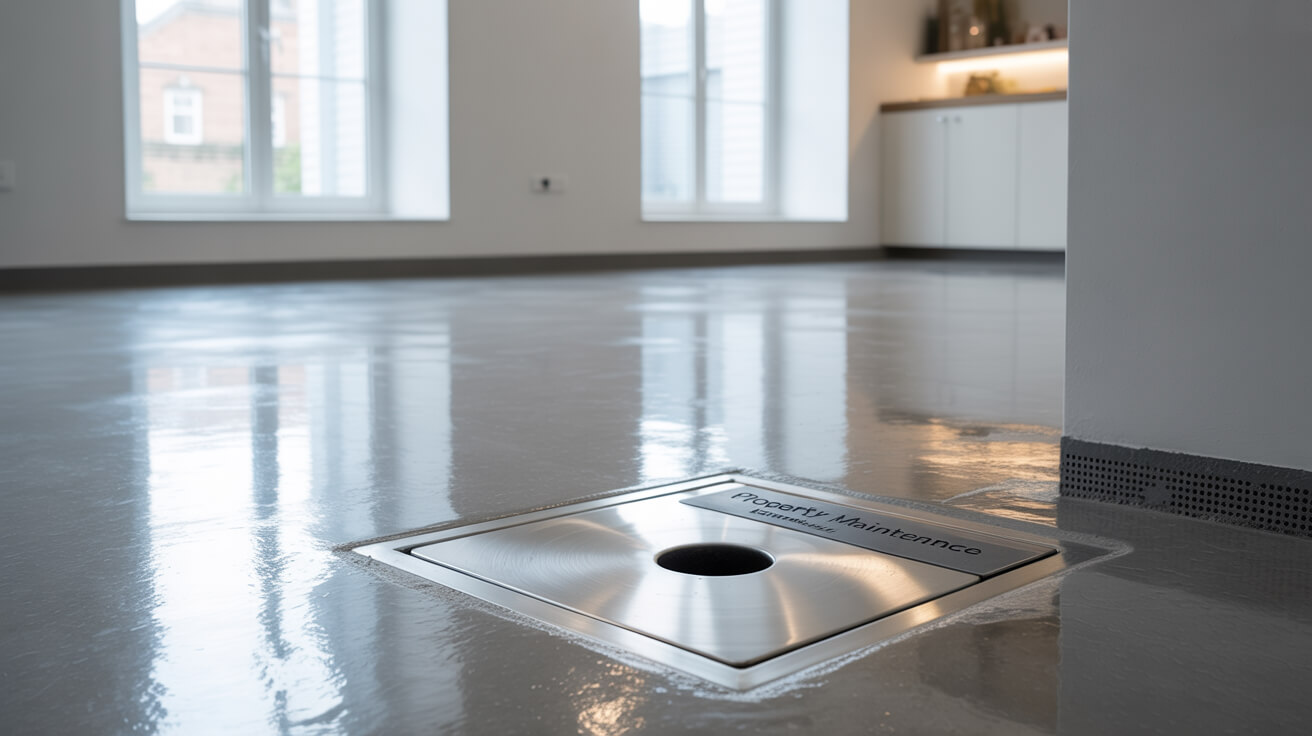
Professional-grade instal is not “bolt in and forget”—it’s the choreography of ground survey, material compatibility, unobtrusive venting, third-party certification, and compliance integration. Each phase, from sump pit setout to airflow calibration, limits intrusion but maximises safety.
What Sets Professional Installation Apart?
- Ground-permeation and airflow modelling calibrated for your substrate/damp-proof profile.
- Council, lender, and heritage-compliance engineering—not “one-size-fits-all.”
- Precision-drilled exits for vent stacks avoiding heritage stone, listed facings, or service clashes.
- After-instal monitoring and attestation synced with sales, insurance, or asset portfolio audits.
Standard instals answer today’s threat. Only certified expertise locks down tomorrow’s audit.
Installation Steps Table
| Step | Expertise Requirement | Compliance Output |
|---|---|---|
| Site survey | Damp/radon specialist | BRE211 worksheet |
| System spec | Instal engineer | Scope statement |
| Positioning | Drill crew, stone/heritage | Core log, photos |
| Sealing/testing | PCA/BBA certified installer | Test log, doc set |
Every instal by Sussex Damp Experts is optimised for the asset’s lifespan—not just next year’s audit cycle.
When To Act: Key Triggers for Radon Mitigation and Legal Requirements
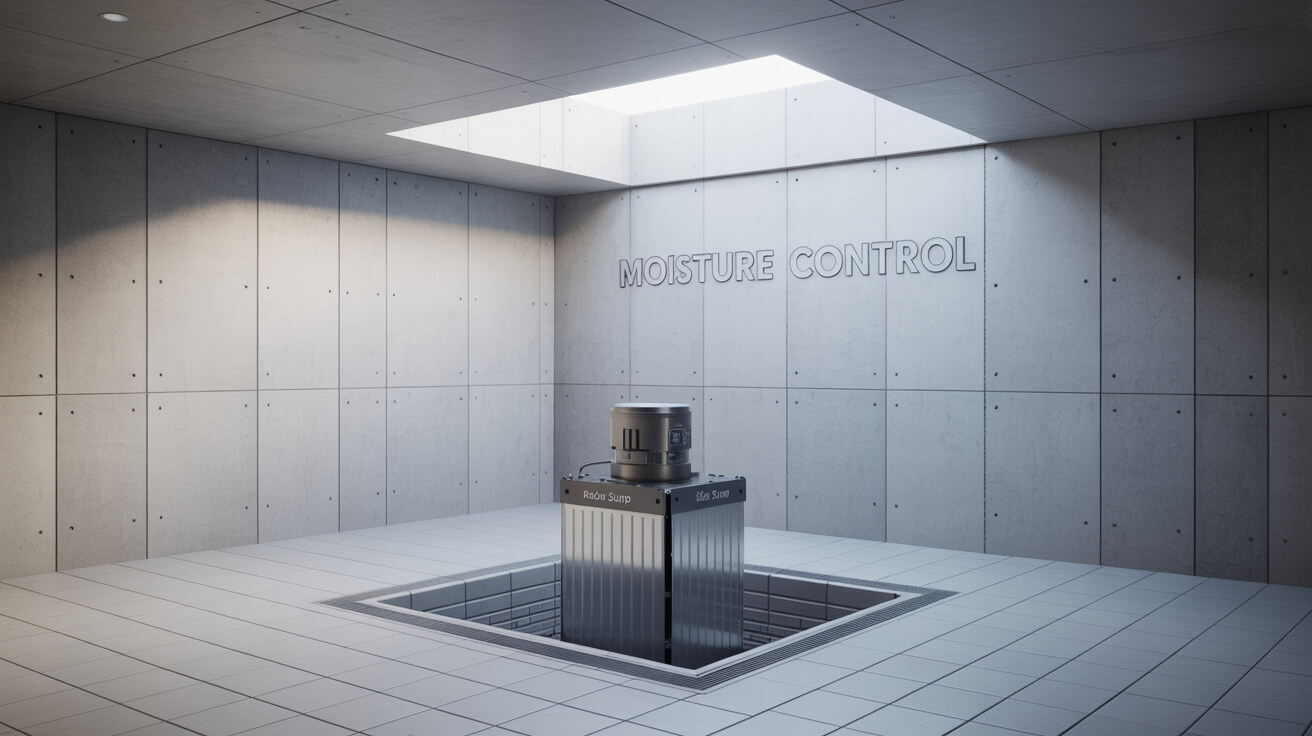
Procrastination is the enemy of both compliance and value preservation. Action is not for those who “have a problem”—it’s for those who never want to face one. Legal and practical triggers are expanding: pre-purchase, new build, tenancy switch, grant compliance, or heritage re-fit.
Which Events Demand Immediate Action?
- Sale or acquisition in any mapped or high-permeability zone.
- Change of tenant or occupancy, especially older commercial properties.
- Major renovation involving new slabs, underpinning, or subfloor reconfig.
- Receiving a radon above-action-level test or council notification.
- Insurance, grant, or HHSRS review (especially for portfolios or listed asset owners).
Sussex Damp Experts synchronise your remediation schedule to your business/compliance calendar—so projects stay on track, transactions complete, and threats turn into opportunities.
Preemptive scheduling:
Triggering mitigation at mapped events prevents spiralling cost, regulatory penalty, or lost sale equity.
Can You Upgrade or Maintain Radon Sumps for Lifetime Protection?
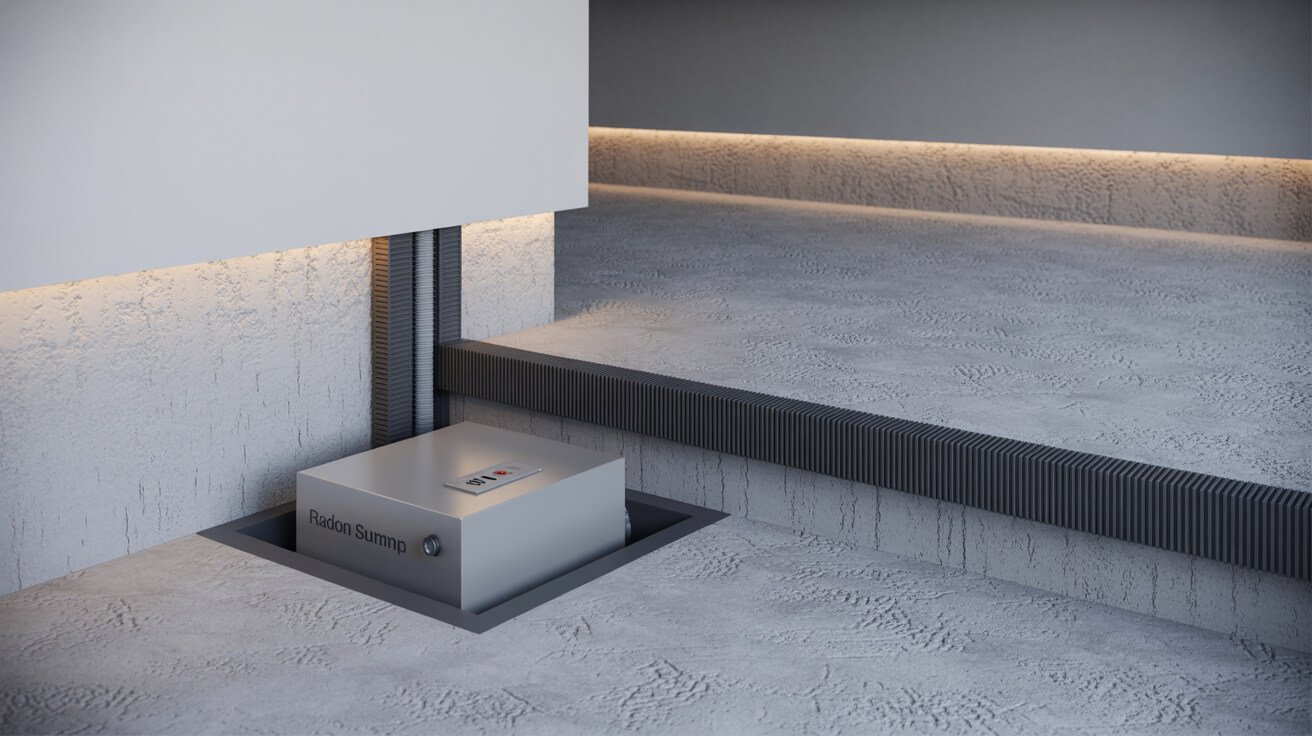
A static system is a liability. Only proactive, monitored maintenance preserves ongoing compliance, health, and saleability. This includes scheduled detector placement/fan audit, responsive upgrades to new standards, and integration with changing property use.
What is Required for System Longevity?
- Annual/scheduled radon sampling beyond simple “set and forget.”
- Service-level monitoring for fan integrity and vent continuity.
- Pre/post-renovation compliance review, especially after any major ground intervention.
- Paperwork and warranty workflow for every regulatory or stakeholder audit.
Mitigation without aftercare is just a false sense of readiness.
Maintenance plans from Sussex Damp Experts cover all aftercare angles, from regular reporting to system upgrades for evolving standard or use-case demands.
Upkeep as a compliance amplifier:
Maintaining your radon mitigation system is a technical and legal advantage—enabling easier sales, faster lending, and a confident asset profile.
Book Your Free Consultation With Sussex Damp Experts Today
Expert radon protection is not just an installation—it’s a partnership in the ongoing safety, compliance, and long-term value of your property. Whether you need a pre-sale survey, full portfolio readiness for letting, or a heritage-compliant upgrade, the Sussex Damp Experts team works for your peace of mind. Each assessment, plan, and instal is tailored—to your location, building type, and outcome standards. Stakeholders from homebuyers to council officers receive defensible, audit-ready documentation. Owners and managers secure more than systems: they earn trust from every stakeholder for years to come.
Sussex Damp Experts: What Sets Our Services Apart?
- PCA-accredited crews with deep heritage and modern property experience
- Transparent cost and compliance schedules, zero-surprise billing
- Audit-ready paperwork for lenders, insurance, and local authority—issued in your name
- Fast, responsive scheduling matched to sales, business, or family deadlines
Solidify your property’s compliance, secure your investment, and create a safety baseline appreciated by every future stakeholder.
True asset value is measured in problems you’ll never need to fix.
Frequently Asked Questions
What does a radon sump actually achieve, and why does its installation mark the difference between managed risk and silent liability?
A radon sump is your most powerful tool for extracting radon gas before it seeps into spaces people live, work, or sleep.
Beneath unprotected ground floors or ageing slabs, radon from the soil finds every channel—expanding through voids, cracks, and porous seams. Relying on air-changes or mechanical ventilation for protection alone means you’re gambling with unseen exposure, insurance rejections, and even failed property sales. The sump, set below the slab and vented beyond the building envelope, establishes a negative pressure zone: radon is captured before it has a chance to accumulate indoors, and is harmlessly dispersed outside.
By placing control at the root of the problem—not reacting after accumulation—you demonstrate diligence to lenders, surveyors, and anyone who may one day hold your keys. There’s no generic substitute; only correctly specified and installed sumps provide reliable, certifiable mitigation.
A table to illustrate how radon sump installation preempts escalating risk:
| No Sump Installed | Sump Effect in Action |
|---|---|
| Room-by-room mitigation failures | Whole-structure capture |
| Ongoing monitoring requirement | Stability after certification |
| Mortgage or insurer flags at sale | Asset value protected |
| Repeated tenant complaints | Compliance checked off |
With Sussex Damp Experts, you benefit from exacting placement, technical oversight, and documentation that seals value and safety into your foundation.
Why can waiting on radon risk be far costlier than proactive sump installation for your property or asset?
Waiting increases health and legal dangers—radon exposure compounds, but so do costs when remediation is triggered by external audit or regulatory fail.
Property owners often learn the real risk only when an urgent issue—or transaction collapse—forces attention. Health agencies rank radon as a leading cause of lung cancer after smoking. But beyond medical statistics, the cost spiral starts when a mortgage is put on hold, a tenancy is stalled, or compliance investigations are opened by local councils.
Property managers and landlords are increasingly cited for non-compliance under regulations like HHSRS or under new insurance exclusions on unmitigated radon. Every day without system-level mitigation translates to escalating insurance premiums or lost weeks of rental income after a survey flag.
Case in point:
- *A Brighton townhouse failed a pre-sale survey for high radon. Emergency remedial works added £8,000 and delayed the sale by three months—costing both owner and buyer more than scheduled, proactive mitigation ever would.*
Your own mitigation investment with Sussex Damp Experts integrates:
- Pre-sale or pre-let testing and reporting
- Documentation that defuses lender or council obstacles before they arise
- Health protection for staff and families—even during prolonged occupation
Owning the narrative on radon means you own your asset’s future; the rare owners who act before being pushed set the standard others scramble to follow.
Where should you look for concealed radon pathways, and when does standard moisture control fall short?
Radon exploits weaknesses missed by most routine moisture checks or damp-proofing solutions—appearing wherever permeability, structural joins, or site conditions permit upward flow.
Typical overlooked routes:
- Loosely-capped pipe entries or cable penetrations
- Voids under suspended timber floors after upgrades
- Cracks or gaps at wall–slab joins, especially after “cosmetic” replastering
- Tanks, cellars, or historic basements where subsoil contact was never interrupted
Moisture control addresses water ingress or condensation—not the airborne infiltration of radon, which requires block-by-block, system-level evacuation. Even in properties fitted years back with basic barriers, bridging or contractor error can leave a seamless overcoat but gas risks on the rise.
Evidence-based triggers to check now:
- Change in property use (e.g. residential to nursery, office to healthcare)
- Refurb or underpinning project schedule
- Any housing asset older than 20 years without certificate-backed mitigation
Investing in a radon risk survey, with the attending expertise from Sussex Damp Experts, offers actionable mapping—not just of what you can see, but of the pathways you would never otherwise catch.
What type of radon sump—passive, active, or hybrid—unlocks both compliance and operational freedom for you?
Selecting the right sump system is a study in risk, compliance appetite, and operational context. A passive sump harnesses pressure differences for properties with moderate risk—a silent, no-maintenance solution that fits beneath most ground slabs and basement conversions.
Active sumps go a level deeper: a robust, fan-driven engine extracts gas even under fluctuating site conditions, or when subsoil pressures change seasonally. In multi-unit, high-visitor, or heritage sites, the hybrid model (passive-to-active) allows you to start lean, then scale up protection instantly to accommodate flagged readings or regulatory change.
Comparison Table
| Criteria | Passive Sump | Active Sump | Hybrid System |
|---|---|---|---|
| Ongoing Maintenance | Minimal | Fan checks, replace | As needed |
| Heritage + Listed Compatibility | High | Medium (if reversible) | Highest |
| Speed to Deploy | Fast | Moderate | Fast/Scalable |
| Long-Term Compliance Assurance | Moderate | Highest | Flexible |
The best solution isn’t just technical: It is adaptive, future-resilient, and can be certified, documented, and scaled seamlessly. Sussex Damp Experts configure each system by property phase, regulatory environment, and owner goal—ensuring what’s fitted today remains the right answer years from now.
How does expert installation by Sussex Damp Experts recalibrate both compliance and ease for property owners, landlords, and site managers?
Expert radon sump installation is a convergence of safety, evidence, and regulatory confidence. Each detail is project-mapped to anticipate site constraints, asset heritage, and future scrutiny from councils, buyers, or tenants.
Your process with Sussex Damp Experts covers:
- Site-specific moisture, airflow, and ground gas analysis:
- Regulatory review (BRE211, BBA, sector or lender standards):
- Optimised placement for both performance and fabric preservation:
- Precision sealing, vent routing, verification:
- Dossier compilation—a complete document pack covering placement, test results, and maintenance triggers:
Self-directed or non-specialist instals rarely meet the evidential burden when insurers or compliance inspectors call for traceability. Our rigour delivers a permanent status asset: when solicitor, auctioneer, or risk manager requests documentation, you can present traceable proof, not hope.
Compliance today replaces months of stress or last-minute expense during a future transaction. This is reputation and resilience you don’t have to advertise—it will be noticed.
When is the right—sometimes only—moment to act on radon, and how does timing transform liability into leadership?
Timing is governance. The property owners and managers who respond at inflexion points—not after-the-fact—protect both bottom line and brand. Triggers include:
- Pre-purchase building survey outcomes
- Portfolio-wide asset review cycles
- Scheduled refurbishments, structural works, or major tenancies
- Insurance, council, or regulatory audits
- Population shift (e.g., school conversions, care home expansion)
Each moment is an opportunity: to preempt cost escalation, grab the upper hand in compliance negotiations, and become the case study others model. Delaying until forced by external pressure is the universal pattern for owners caught unprepared.
A decisive move with Sussex Damp Experts means:
- You anticipate and neutralise future costs
- You hold ready-certified documentation for any audit
- You build a property reputation that’s regulatory-proof and asset-positive
Governance strength is marked by who sets standards—not who merely follows them under duress. The most respected names in the industry are those who don’t wait to be told what must be done.

