
 By
 April 5, 2026


Why PCA registration reduces mortgage lender friction
Your mortgage lender may accept deathwatch beetle treatment from a non-PCA contractor, but that is not the question that decides your outcome. The real question is whether the valuer is satisfied by the evidence chain: a credible report, appropriate qualifications, and a guarantee the lender can still rely on if the contractor later ceases trading. That is why PCA registration often reduces friction, even though it is not a universal legal rule. Published lender criteria show the pattern clearly: Nationwide focuses on a whole-property report, recent dating, and a 10-year insurance-backed guarantee where remedial damp works are required, while Halifax explicitly allows some non-PCA timber and damp reports if the works are covered by insurance. Your decision therefore turns on report scope, qualifications such as CSTDB or CSDB, active versus historic infestation, and any heritage constraints affecting treatment options (UK Finance Mortgage Lenders’ Handbook; RICS Building Survey practice note).
Will your lender accept a non-PCA deathwatch beetle treatment?
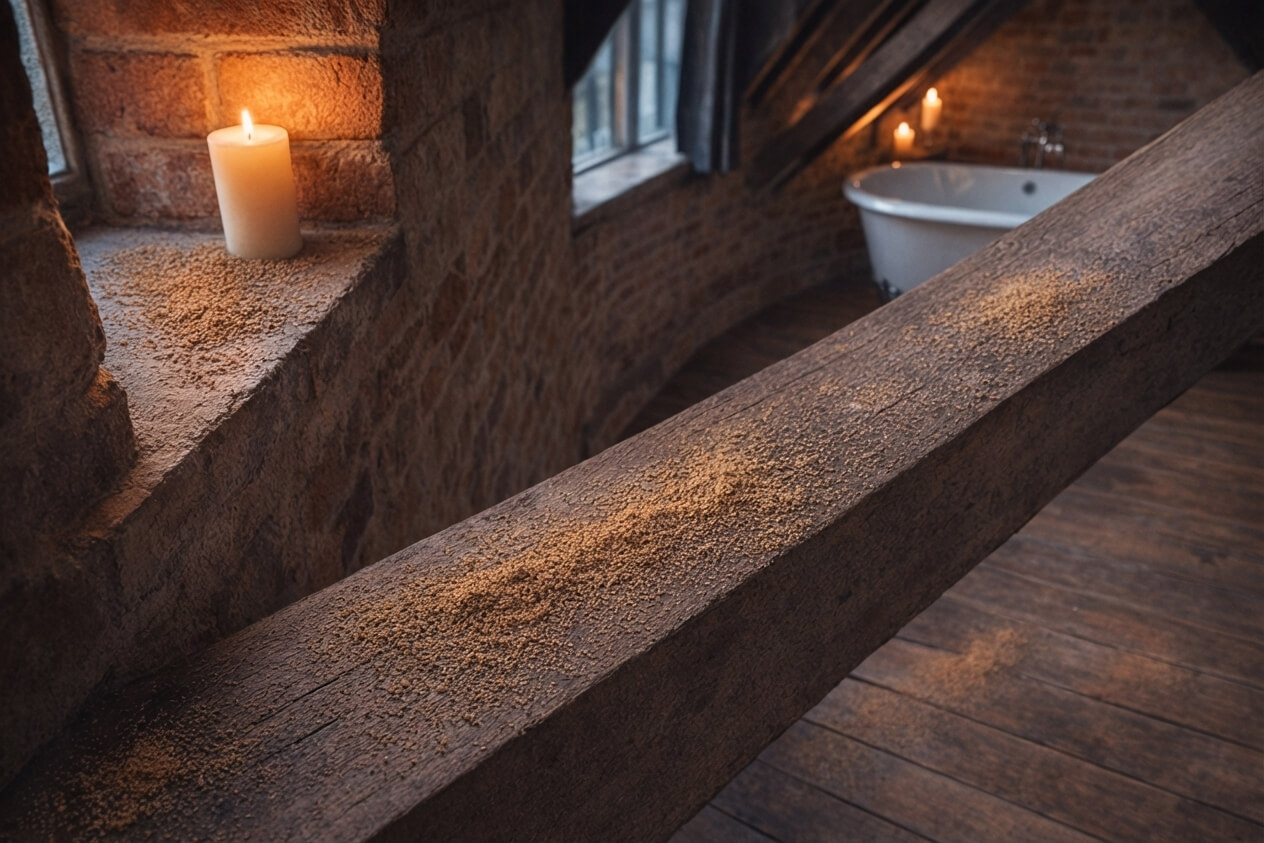
Your lender may accept non-PCA work, but only if the valuer trusts the report, the qualifications, and the guarantee behind it.
That is the part many people miss. You see “deathwatch beetle” on a survey, ring a contractor, get a quote, and assume the job is now treatment. For a mortgage lender, it is first an evidence problem. Lenders rely on the valuer’s condition, the specialist report, and the paperwork that follows. UK Finance’s handbook structure reflects that rules vary by institution, while RICS guidance shows surveyors often call for further investigation by an appropriately qualified person when timber risk or hidden defects are involved (UK Finance Mortgage Lenders’ Handbook; RICS Building Survey practice note).
The short answer most readers need
Sometimes yes. Not safely by default.
Halifax is the clearest published example. It accepts timber and damp specialist reports from PCA-recognised qualifications, including CSTDB and CSDB, but also says reports from non-PCA members can be considered if any works are covered by insurance. That tells you two things at once: PCA is not always mandatory, and unregistered work usually needs stronger supporting evidence to travel through underwriting without delay.
Nationwide shows the same logic from a different angle. Its published criteria do not say “PCA only”, but they do require a damp and timber report for the whole property, dated within 90 days, and a 10-year insurance-backed guarantee where remedial damp treatment works are needed. In other words, the lender is assessing reliability, scope, and survivable protection, not just whether somebody has sprayed a timber.
What usually decides acceptance in practice
Four things usually decide whether your paperwork works first time: the report must cover the right areas, the surveyor or contractor must be credibly qualified, the findings must distinguish active from historic infestation, and the guarantee must be usable by the lender and any future buyer. RICS specifically distinguishes active and inactive beetle infestation in residential valuation reasoning, which is crucial in deathwatch cases because old holes alone do not prove present structural risk (RICS Building Survey practice note).
Deathwatch beetle raises that bar because it is associated with decayed hardwoods, especially oak, and its life cycle commonly runs for four to five years but can extend to ten. Adults usually emerge in spring and early summer, so timing, frass, moisture levels, and timber condition all affect whether a valuer sees an active threat or mainly historic evidence (Cranfield University deathwatch beetle study).
If you have already paid for a timber report and your lender asks for “further specialist evidence”, the first evidence chain was too weak: perhaps the report was too local, too vague, not costed, not recent enough, or unsupported by a guarantee the valuer could rely on.
Where buyers and sellers get caught out
The usual trap is assuming any timber report is a lender-ready report.
A cheap inspection can still leave you with no clear statement on activity, no costed repairs, no comment on moisture source, and no transferable guarantee wording. Financial Ombudsman decisions show what happens next: a valuer can still hold to a nil valuation or trigger a full retention even after reports are submitted if the underlying risk remains unclear or too expensive. That is why the paperwork matters as much as the treatment itself.
What PCA registration actually changes for you

PCA registration changes the strength of your evidence chain by linking the report to recognised standards, qualifications, and guarantee routes.
That does not mean every PCA member is automatically accepted, or that every independent contractor is unsuitable. It means a PCA route is easier for lenders, valuers, and conveyancers to recognise. In mortgage-sensitive deathwatch beetle cases, that recognisability often matters nearly as much as the treatment specification itself (RICS Building Survey practice note).
Company membership is not the same as individual training
A common source of confusion is the difference between a PCA member company and an individual who has some timber or damp training.
PCA membership is a company-level status with rules on logo use, compliance, complaints, and ongoing standards. Separately, surveyor qualifications such as CSTDB and CSDB show individual technical competence in timber and damp diagnosis. Halifax’s criteria make that distinction useful in real life by explicitly naming PCA-recognised qualifications in acceptable timber and damp reporting. A contractor saying “we know woodworm” is not the same as a documented competence trail.
“For mortgage-related timber reports, the issue is not simply whether a contractor can apply treatment. It is whether the surveyor’s diagnosis, qualifications and record-keeping are robust enough that a lender and valuer can rely on the recommendation without asking for the process to start again.” — Technical Manager, Property Care Association
Why lenders and surveyors recognise PCA-linked routes
PCA-linked routes are easier to trust because they create a visible paper trail: recognised qualifications, audited membership expectations, formal complaints routes, and access to insurance-backed guarantee pathways. PCA also makes clear that only full members can display its logo and that false claims of membership are investigated.
Sussex Damp Experts is PCA-registered, and that matters here for one reason only: when we assess deathwatch beetle in a mortgage context, we can map the report, qualifications, and guarantee route to the evidence chain lenders and surveyors already understand.
What PCA does not guarantee
PCA registration does not force a lender to say yes.
It does not replace the need for a whole-property report, an active-versus-historic diagnosis, or heritage-sensitive recommendations. And if there are doubts about structural stability, RICS guidance shows further investigations may still need to come from a structural engineer or another appropriately qualified specialist. So PCA status is a credibility layer, not a shortcut around the real evidence (RICS Building Survey practice note).
What a lender-ready deathwatch beetle report actually contains

A lender-ready deathwatch beetle report explains the risk, the cause, the scope of work, and the protection that follows.
That is why valuer-friendly reports feel different from ordinary surveys or quote visits. They do not just say “woodworm found” or “treat timbers”. They explain whether the infestation appears active, where the associated decay and moisture are coming from, what access limits existed, what repairs are needed, and what guarantee structure will support the work (RICS Building Survey practice note; Sheffield City Council timber survey guidance).
Scope that satisfies a valuer
Nationwide’s criteria give the clearest public benchmark: the report must cover the whole property and be dated within 90 days. RICS adds the valuation logic behind that requirement, because the surveyor needs evidence that deals with hidden risk, timber defects, and the difference between active and inactive infestation. In deathwatch cases, that usually means commentary on hardwood timbers, damp conditions, fungal decay, and any structural implications of continued attack (RICS Building Survey practice note).
A strong report also shows its limits. If roof voids were inaccessible, panelling concealed beam ends, or floor coverings prevented inspection, that should be stated plainly. Valuers are more likely to rely on a report that explains restricted access honestly than one that sounds certain while saying very little.
“Where a surveyor asks for further investigation, the most useful report is one that narrows uncertainty. It should explain the extent of the defect, whether it appears active, the likely implications for value and repair, and any limitations on inspection. If those points are missing, the valuer is likely to remain cautious.” — Chartered Building Surveyor, Royal Institution of Chartered Surveyors
Common report failures that trigger retention or rejection
The weak version is easy to spot. It is local rather than whole-property, heavy on recommendation and light on diagnosis, vague on costs, silent on whether infestation is current, and thin on what happens if the contractor later ceases trading. That is the kind of document that leaves a valuer asking for more, or a lender moving to retention until works and guarantees are complete.
If you are selling, weak reports create a second problem. Your buyer may believe the issue is resolved, but their lender can still refuse to rely on seller-side paperwork if it is out of date, not assignable, or not addressed in a way the valuer can use.
| Feature | Lender-ready report | Typical weak survey |
|---|---|---|
| Scope | Whole property, not just one visible area | Local inspection or quote visit only |
| Activity | States active vs historic with supporting evidence | Mentions holes but no firm conclusion |
| Cause | Links infestation to moisture, decay, and environment | Recommends treatment without explaining cause |
| Costs | Includes costed repairs or treatment implications | No pricing or only verbal estimate |
| Reliance | Clear guarantee route and transferable wording | No guarantee detail or company-only promise |
Insurance-backed guarantees and why lenders fixate on them

Lenders focus on insurance-backed guarantees because they protect the work after the contractor’s own promise may have disappeared.
That is the practical difference between a normal company guarantee and an IBG. A company guarantee only works while the firm exists and honours it. An insurance-backed guarantee is designed to sit behind that promise if the contractor ceases trading. PCA explains this clearly, and Nationwide’s published criteria show why lenders care: where remedial damp treatment works are required, it wants a 10-year IBG in the applicants’ names and/or transferable to new owners (UK Finance Mortgage Lenders’ Handbook).
What an IBG protects, and what it does not
An IBG protects continuity. It does not make a poor specification good, and it does not repair a report that failed to define the problem properly.
If a deathwatch report is shallow, an IBG does not solve that. If the wrong timbers were treated, or structural repairs were omitted, the existence of insurance does not magically persuade a valuer the property is now sound. The guarantee sits late in the evidence chain. It supports the remedy; it does not replace diagnosis.
“Lenders look closely at guarantees because they are really looking at continuity of protection. A contractor’s promise may be valuable, but an insurance-backed guarantee is what gives the lender comfort that the position does not collapse if the original firm is no longer trading a few years later.” — Technical Representative, Property Care Association
When a company-only guarantee may still be accepted
Sometimes a company-only guarantee can still be workable, especially where the lender wording is flexible and the supporting evidence is otherwise very strong. Halifax’s wording is instructive here: it allows non-PCA reports if the works are covered by insurance, which shows that insurance is the acceptance signal, not membership alone. In bespoke heritage cases, a lender may also lean heavily on structural engineer advice, monitoring, or conservation-led reasoning rather than a standard remedial package.
How guarantee wording affects your conveyancing timeline
Small wording problems cause big delays. The guarantee may be in the wrong name, not expressly transferable, unclear on the property address, or disconnected from the actual works specified in the report. When that happens, your solicitor or lender can ask for reissue, assignment, or clarification, and completion slips while everyone waits for paperwork to catch up with the treatment already done.
If you are close to exchange, check the guarantee before anybody asks for it. Confirm names, address, dates, scope of works, transfer terms, and whether the insurance sits behind the contractor’s promise or is merely described in sales language. That five-minute check can save you days.
Heritage and listed building complications

Heritage deathwatch cases need evidence-led restraint because treatment may be limited by consent, conservation logic, and the building’s original fabric.
Deathwatch beetle is strongly associated with older buildings, decayed hardwoods, and oak timbers. Historic England warns that timber treatment may not be necessary where infestation is historic, and that the moisture source and any bat issues should be addressed before specifying chemical work. PCA guidance also notes that, because affected buildings are often old, listed building consent may be needed for some repairs or replacement work (Historic England timber treatment guidance; Cranfield University deathwatch beetle study).
Why standard timber treatment may not be permitted
If your property is listed, the obvious treatment plan may not be the permissible one.
Replacing original oak, opening up concealed fabric, drilling extensively, or using certain chemicals can raise conservation objections. That means a lender condition asking for “treatment” may need to be answered by a more careful package of evidence: diagnosis, environmental control, limited repair, monitoring, and where needed a structural opinion on residual performance (Historic England timber treatment guidance).
PCA guidance on deathwatch beetle also recommends careful inspection during the emergence period, removal of moisture sources, drying out affected areas, and cautious treatment planning because deep larvae may not be resolved by superficial application alone. In a listed building, that technical reality and the conservation reality often collide. You need a solution that is both effective and consentable (Cranfield University deathwatch beetle study).
“With historic buildings, the first question is not ‘what can we apply?’ but ‘what is actually necessary?’. Old beetle flight holes, decayed oak and listed status demand a conservative approach: understand the moisture source, confirm whether activity is current, and avoid irreversible work unless the evidence clearly justifies it.” — Building Conservation Adviser, Historic England
What lenders expect when treatment options are limited
If you own a Grade II listed house and the lender wants treatment while the conservation officer resists invasive work, the answer is usually not confrontation. It is better evidence.
That can mean a report showing historic rather than active infestation, a moisture-management plan, selective repair instead of wholesale treatment, and engineer comment if strength is in question. The goal is still the same: restore valuer confidence through the evidence chain, even when the remedy is not a standard spray-and-guarantee package (Historic England timber treatment guidance; RICS Building Survey practice note).
Choosing between a PCA-registered and independent contractor

The better choice is the contractor who can meet your lender’s evidence chain first time, not the one with the cheapest quote.
That is why this is a mortgage-compliance decision as much as a treatment decision. A good independent contractor may be acceptable. A poor PCA member can still create work. But if your case is mortgage-sensitive, deathwatch-specific, and possibly heritage-linked, you should choose on documentary strength, not just price or availability.
Questions to ask any contractor before you commit
Ask who will write the report and what qualifications they hold. Ask whether the report covers the whole property or just the visibly affected area. Ask how it will distinguish active from historic infestation. Ask whether the guarantee is insurance-backed, who issues it, whether it is transferable, and whether the contractor has experience with older oak-framed or listed buildings. Those questions expose the difference between a mortgage-aware specialist and a treatment-only contractor very quickly (RICS Building Survey practice note; Historic England timber treatment guidance).
Ask one more question as well: what happens if the lender rejects the report format? A mortgage-aware contractor should be able to explain how the report is structured for valuers, what supporting documents follow the works, and how guarantee details are issued. If the answer is vague, that tells you a lot.
Red flags that predict lender rejection
Be cautious if you are offered a verbal opinion instead of a written report, a quote without diagnosis, a certificate without a defined scope of work, or a “guarantee” with no insurance route behind it. Those are the patterns most likely to trigger a second report request, retention, or a solicitor query later in the transaction.
Also be wary of anyone who treats deathwatch beetle as if it were ordinary furniture beetle in a softwood skirting board. Deathwatch is more often linked to decayed hardwood and hidden structural timbers. If the contractor does not ask about moisture, access, oak, fungal decay, or building age, you may be looking at a treatment proposal that is too generic for a lender to trust.
| Issue | PCA-registered route | Independent route |
|---|---|---|
| Qualifications | Easier to evidence with recognised membership and surveyor routes | Must be demonstrated more explicitly |
| Guarantee options | IBG pathway usually clearer | May still work, but wording and insurance matter more |
| Lender friction | Often lower because the paperwork is familiar | More case-by-case scrutiny |
| Heritage handling | Depends on firm, but competence is easier to verify | Experience must be checked carefully |
If you want your report built around lender acceptance rather than guesswork, Sussex Damp Experts can assess the infestation, map the evidence chain, and help you move towards paperwork your valuer can actually use.
What to do if your lender has already rejected a report
A rejected report does not always kill the transaction, but it usually means you need a stronger evidence chain quickly.
Your first step is to get the exact wording of the lender or valuer condition through your broker or solicitor. “Further specialist evidence” can mean several different things: a whole-property report, a clearer activity assessment, costed repairs, a guarantee correction, or structural input. Without the wording, you are only guessing at the fix (UK Finance Mortgage Lenders’ Handbook; RICS Building Survey practice note).
Immediate steps to unblock your transaction
Commission the right report, not just another report. Ask for explicit comment on active versus historic infestation, affected structural timbers, moisture source, recommended remedial works, and guarantee route. If the first report came from a contractor without recognised qualifications or usable insurance wording, say so early. That often shortens the loop.
Then line up the people who actually move the decision. Your broker needs the lender wording. Your solicitor needs the guarantee and transfer detail. Your surveyor or timber specialist needs to know what the valuer was worried about in the first place. When those three strands stay separate, time is lost. When they are aligned, the path back to acceptance gets much shorter.
If you are under a completion deadline, ask one practical question immediately: can the original report be supplemented, or must it be replaced? That answer can save both money and time. Sometimes one clarification letter fixes the issue. Sometimes nothing short of a fresh inspection will do.
When a second opinion saves the sale
If completion is approaching and the first report has been rejected, a second opinion can still rescue the deal, especially where the real issue is paperwork quality rather than severe structural loss. In some cases the right move is a new timber specialist report; in others it is a structural engineer’s opinion, a revised guarantee, or a reinspection timed to confirm whether deathwatch activity is current. The sooner the evidence chain is repaired, the better your chances of keeping the transaction alive (RICS Building Survey practice note; Cranfield University deathwatch beetle study).
If you are days from exchange, do not wait for a generic email trail to sort itself out. Ask for the lender’s precise requirement in writing, check whether the original report can be supplemented rather than replaced, and move straight to the missing link. Sometimes that link is qualification evidence. Sometimes it is guarantee wording. Sometimes it is a stronger explanation that the infestation is historic, moisture has been addressed, and the remaining timber is adequate for continued use.
That is the final reassurance in all of this. A rejected first report is frustrating, but it is not always a verdict on the property. Often it is only a verdict on the paperwork. Fix the evidence chain, and you often fix the transaction.
Frequently Asked Questions
How much more does a PCA-registered deathwatch beetle report usually cost than an independent report?
A PCA-registered deathwatch beetle report can cost more upfront, but the range depends heavily on what you are actually buying. The real comparison is not PCA versus non-PCA as labels. It is a mortgage-ready diagnostic report versus a basic inspection or quote visit.
RICS guidance is useful here because it frames further investigations as work that should be carried out by an appropriately qualified person and should properly address the defect in question. In practice, that means the fee rises when the report needs to cover the whole property, deal with access limits, assess structural significance, and set out a reasoned remedial path rather than simply recommend treatment. If your lender or valuer is likely to rely on the report, those extra layers are often what you are paying for.
Pricing also varies with the building itself. A modern house with clear access to roof voids and floor timbers is usually simpler than a listed cottage with boxed-in beams, fitted carpets, panelling, or restricted cellar access. If opening-up is needed, if multiple areas require inspection, or if the property is oak-framed, survey fees can rise because the inspection takes longer and the reporting burden is greater. The same applies where a separate structural opinion may be needed.
The biggest cost mistake is comparing only the survey fee. A cheaper independent report can become the more expensive route if your lender refuses it, your solicitor asks for clarification, or a second inspection has to be commissioned. By contrast, a better-prepared report may cost more once but move the transaction faster.
So if you are comparing quotes, ask three direct questions: is this a report or a quotation, does it address lender use, and what access assumptions are built into the price? If those answers are unclear, the headline fee tells you very little.
How long does a deathwatch beetle treatment certificate stay useful when you sell later?
A deathwatch beetle treatment certificate does not stay “valid” forever in the way people often assume. Its usefulness on resale depends on what the certificate actually says, how long ago the work was done, whether the guarantee still exists, and whether there is evidence that the underlying moisture and decay problems were properly dealt with.
That matters because deathwatch beetle has a long life cycle. PCA guidance commonly describes a four- to five-year cycle, with some cases extending further, so an old certificate that proves treatment happened once may not answer a buyer’s current question about present activity or residual damage. A valuer is not just checking whether work once took place. They are deciding whether the property is currently suitable security.
If you are selling with an older certificate, its value rises sharply if you can also show the related paperwork: scope of treatment, contractor details, guarantee terms, transfer documents, and any evidence of follow-up inspections or repairs. A certificate on its own is often too thin. A dated certificate with no guarantee and no explanation of what timbers were treated can easily be treated as historic background rather than current reassurance.
Transferability also matters. Some guarantees are written to the original owner only, while others can be assigned to future owners. If the guarantee can transfer, that tends to make the paperwork more useful. If it cannot, a buyer’s lender may still ask for fresh specialist evidence, especially if the property is older, listed, or still shows visible timber defects.
Your best approach before resale is to review the old file early. Check whether the guarantee still exists, whether it can be assigned, and whether the original report is detailed enough to stand up to scrutiny. If it is not, a fresh mortgage-aware timber report before marketing can prevent the same last-minute dispute from happening all over again.
What should you prepare before a surveyor visits for suspected deathwatch beetle?
You can make a timber inspection far more useful by preparing access, paperwork, and context before the surveyor arrives. The biggest avoidable problem in deathwatch cases is not always the beetle itself. It is incomplete inspection caused by blocked access to the timbers that matter.
Start with access. If you know there are loft hatches, cellar spaces, under-stair voids, boxed-in beams, fitted cupboards against external walls, or boarded areas concealing structural timbers, clear them as far as you reasonably can. Surveyors and specialists often need to inspect roof timbers, beam bearings, floor edges, and concealed voids. If those areas are inaccessible, the report may have to state that important elements could not be seen. Under RICS practice, inspection limitations matter because they affect how confidently a surveyor can assess risk and whether further investigation is needed.
Documents help too. If you have previous timber reports, guarantees, old treatment certificates, building control approvals, listed building correspondence, or records of roof leaks and damp repairs, keep them ready. A surveyor may not rely on them uncritically, but they provide valuable context. They can show whether signs are longstanding, whether moisture defects were addressed, and whether earlier treatment was targeted or generic.
Also think practically about timing. Good lighting helps. A torch, keys for padlocked outbuildings, and details of when activity was last noticed can all reduce guesswork. If you have seen fresh dust, heard tapping in spring, or noticed recent changes in timber condition, say so clearly.
If key areas cannot be accessed, expect caution. The surveyor may recommend a more invasive follow-up, seasonal reinspection, or specialist opening-up. That is not a bad outcome. It is often the difference between a vague report and one your lender can actually use.
Can you use a structural engineer instead of a timber specialist for mortgage approval?
Sometimes you can, but only if the lender’s real concern is structural adequacy rather than timber diagnosis. A structural engineer and a timber specialist answer different questions, and the wrong choice can waste both time and money.
RICS guidance on further investigations is the key reference point here. It says investigations should be carried out by an appropriately qualified person depending on the defect. If the issue is whether a beam, joist, truss, or floor is still structurally adequate, a structural engineer may be the right specialist. If the issue is what is attacking the timber, whether infestation is active, why the conditions arose, and what remedial treatment is appropriate, a timber specialist is usually the better first call.
The distinction matters because lenders often phrase conditions narrowly. A valuer may ask for a damp and timber report, which an engineer may not be best placed to provide. Equally, if the valuer is worried about deflection, bearing failure, or loss of structural capacity, a timber report alone may leave the key question unanswered. In many period properties, especially oak-framed ones, the most effective route is a combined approach: timber diagnosis first, structural opinion where load-bearing adequacy is still uncertain.
You should therefore match the specialist to the wording, not to the profession you happen to find first. Read the condition carefully. If it mentions infestation, decay, damp, or treatment, start with a timber specialist. If it refers to movement, structural safety, sagging members, or adequacy of repairs, an engineer may need to be involved.
The practical test is simple: what must be proved for the lender to proceed? If the answer is “the timber is safe,” engineer input may be central. If the answer is “the cause, activity, and remedy are understood,” a timber specialist usually leads. In many mortgage cases, the cleanest answer is not one professional instead of the other, but the right sequencing of both.
How do you check whether a timber contractor is really PCA-registered and properly insured?
You should verify company membership, insurance, and guarantee backing separately. They are linked, but they are not the same thing.
To check PCA registration, use the official member search on the Property Care Association website. That is more reliable than a logo on a van, website footer, or quotation. PCA itself warns about logo misuse, so independent verification matters. You should confirm not only that the company appears on the register, but that the service area matches what you are instructing for timber preservation or damp and timber investigation.
Insurance needs a second check. Ask for evidence of public liability insurance and, if the company is issuing diagnostic reports, professional indemnity insurance. Those cover different risks. Public liability protects against damage or injury during works. Professional indemnity is more relevant where the value of the service lies in inspection, diagnosis, and written recommendations. If a company seems reluctant to provide confirmation, treat that as a warning sign.
If guarantees are offered, ask who actually backs them. A contractor guarantee and an insurance-backed guarantee are not interchangeable. You should ask for the guarantee provider name, whether the cover is transferable, and whether policy terms are available before instruction. If the answer is only “yes, we guarantee our work,” you do not yet know enough.
Finally, verify the person inspecting, not just the business name. Ask who will write the report and what qualification they hold, especially if the company refers to CSTDB or CSDB. If your property is listed or historic, ask for examples of work in comparable buildings, because heritage competence is not automatic.
The safest approach is documentary. Search the membership register, request insurance proof, confirm the guarantee route, and get the surveyor’s name and qualification in writing before you commit.
When is the best time of year to inspect or treat deathwatch beetle?
The best time to confirm activity is usually spring to early summer, but the best time to instruct depends on your deadline, your building, and whether the report is needed for a live mortgage.
PCA guidance commonly points to April to June as the most informative inspection window because that is when adult emergence is most likely. In that period, specialists have a better chance of seeing fresh frass, recent exit activity, and other short-lived clues that help separate active infestation from historic evidence. That does not mean winter inspections are pointless. It means they may need more caution in wording, especially in older buildings full of historic holes.
If your lender needs evidence now, you should not wait for spring simply because it is theoretically ideal. A November report may still be enough if it clearly states what was seen, what could not be concluded with certainty, and whether monitoring or a revisit during emergence season is advisable. That can be particularly important where your mortgage offer, exchange date, or retention condition is already in motion.
Treatment timing is also more nuanced than “spring is best.” If the timbers are damp, if decay is still active, or if leaks have not been fixed, immediate environmental correction may matter more than seasonal treatment timing. In listed buildings, practical constraints can also affect scheduling: bat restrictions, scaffold access, heating cycles, and consent requirements may all determine when work can actually happen.
A useful rule is this: inspect when your transaction requires it, but understand what the season does to certainty. If your report is produced outside the emergence period, ask whether the specialist recommends monitoring, a seasonal revisit, or staged treatment after moisture control. That gives you a more realistic plan than simply waiting for the “perfect” month while the property sale or remortgage drifts.

