
 By
By  April 21, 2023


What Is Ground Water Flooding and Why Must You Detect It Before Damage Escalates?
Rising ground water is one of the most misunderstood threats to the foundations, comfort, and asset value of your property. Unlike overflowing gutters or burst pipes, ground water flooding operates with quiet persistence, causing Water Damage as it permeates floors and foundations before any visible symptom appears. This form of flooding happens when the water table pushes upward, exploiting every unprotected join and weakness in your building’s structure. Once ground water breaks through, it transforms small signs—damp patches, faint odours, persistent chills—into rapid repair cycles and property devaluation.
The Financial Reality of Ignoring Warning Signs
Delaying action on early indicators often leads to exponential cost. Moisture that goes untreated seeps into insulation, timber, and structural walls, raising the risk of black mould and hidden rot. Every month a problem is ignored, projected repair costs grow—not just for cosmetic fixes but for deeper, compliance-driven restoration work.
| Issue | Cost in First 6 Months | Cost After 18 Months |
|---|---|---|
| Surface repair only | £250–£800 | £1,000–£2,500 |
| Structural repair | £0 | £2,500–£10,000+ |
| Insurance excess | Low | Claim may be denied |
Sussex Damp Experts applies the highest diagnostic standards, helping you address water threats at source-before minor changes escalate.
You don’t get a second warning from rising water—just a bigger invoice.
Why Regulatory Standards Define the Safe Path
Industry compliance isn’t just for institutions. The BS 8102:2022 code clearly frames best practice for below-ground waterproofing, mandating proactive assessment before signs manifest. A property’s protection is only as thorough as the method used to detect and diagnose trouble, including Inspection-What to Expect at the earliest stage. Early, standards-based intervention is your best tool for preventing avoidable property losses and safeguarding family, tenant, or business health.
How Do Water Table Dynamics Influence Hidden Flood Risks?

Few homeowners realise that the biggest catalyst for ground water flooding is not a single event, but a shift in the local water table—often invisible, always dynamic, and a key driver of silent Water Damage. Weather patterns, extended rainfall, soil structure, and landscape changes all interact to raise or lower the risk at your address.
The Science Behind Water Table Fluctuations
- Heavy rains saturate the ground, causing soil to hold water for weeks.
- Clay-heavy soils release water slowly, keeping hydrostatic pressure high against basements and garden levels long after rain stops.
- Poorly managed landscaping, blocked soakaways, or even new builds nearby can change underground flow patterns, creating pooling risks where none existed before.
Spotting the Pattern
Many properties experience their first warning signs at the end of winter or after long wet periods. Rooms that were only “occasionally” chilly begin to smell musty. Storage becomes damp. Repairs that worked last season fail without clear cause.
| Soil Type | Risk After Prolonged Rain | Typical Drain Time |
|---|---|---|
| Sandy | Lower, quick to drain | 1–3 days |
| Clay | Higher, holds moisture | 1–4 weeks |
| Silt/Peat | Variable | Days to weeks |
A property’s safety is calculated in the inches the water rises beneath it, not in what the owner can see.
Sussex Damp Experts investigates deeper than surface indicators, mapping seasonal water table changes to provide clear, data-driven advice for your setting—not generic assumptions.
Forward Indicators for Prevention
- Repeated weather events or “flood warnings” in your local area should trigger a groundwater health check—especially if your home or premises have any history of mustiness or slow-drying floors.
What Warning Signs Reveal Water Problems Before They Spiral?

Rarely do structural damp problems explode overnight. Instead, clusters of subtle, often overlooked cues accumulate, each hinting at water’s incremental advance. Recognising this pattern is the difference between an easy fix and months of disruption.
Recognise the Visual and Sensory Red Flags
- *Patchy discolouration*: Perhaps a shadow at floor level, differing in tone or texture from surrounding paint or finish.
- *Softness underfoot at floor edges*: Especially on timber, identifying wet rot risk.
- *Powdery white “salt blooms” (efflorescence)*: A classic sign that mineral-laden water has travelled through your wall.
- *Musty, earthy odour*: Consistent even after cleaning; signals persistent moisture reserves.
- *Condensation on basement walls where none existed before.*
Combine Clues for a Clearer Picture
Conclusive diagnosis often lies in the overlap: one symptom does not confirm, but three are a call for professional inspection. Document changes as they appear—timing, location, recurrence—and you’ll save time in consultation and assessment.
Ignoring one sign is common. Missing three is an expensive habit.
Practical First Steps for Owners
- Check behind stored items or in little-used corners for persistent coldness or moisture.
- Take periodic photos of suspicious areas to compare changes over time.
- Record the outcome of routine maintenance (gutter clearances, landscaping) and monitor for new issues.
If routine drying or heating does not reverse the warning signs, your next move should be a documented investigation—not another round of reactive painting or temporary fixes.
How Can Diagnostic Tools Give You an Unfair Advantage Over Water Damage?

Expert reasoning never guesses. The leap from suspicion to certainty lies in the evidence—anchored by professional diagnostic equipment, not surface impressions. Reliable damp proofing and repair starts with a clear, empirical understanding of where and how water moves, especially where Dynamics Influence Hidden Flood risks.
Modern Damp Detection Tools That Outperform Guesswork
- Moisture Metres: These provide instant digital readings, revealing whether an area’s water content is high enough to threaten structural elements or health.
- Thermal Imaging Cameras: Allow for fast, non-invasive diagnosis of water movement through walls, floors, and finishes—catching issues before visible mould or rot develops.
- Salt Detection Kits: Critical for discerning ground water intrusion from leaks or local condensation.
Integrated Inspection—What to Expect from a Sussex Damp Experts Survey
You get more than a “yes or no” answer. Sussex Damp Experts provides:
- Full-site mapping, showing moisture gradients in affected and at-risk areas.
- Core samples or serial imaging as needed, for insurance and mortgage acceptance.
- Clear, photographic and numeric records you can present to insurers, tenants, or property managers.
| Tool | Best For | False Positive Rate |
|---|---|---|
| Moisture Metre | Surface + Subsurface | Low |
| Thermal Camera | Hidden water movement | Very low |
| Salt Test Kit | Source origin | Moderate |
One reading is a snapshot. Layered diagnostics are a decision engine.
This data-driven approach reduces risk, removes ambiguity, and protects you from the sunk costs of repeated—unsuccessful—repairs.
Why Is Regulatory Compliance Essential to Financial Security and Peace of Mind?

Property risk is as much about paperwork as plaster. In the event of disputes or insurance claims, compliance with established standards and documentation can mean the difference between immediate payout and protracted, expensive argument.
Key Compliance Standards and Their Real-World Value
- BS 8102:2022: The definitive UK code for basement waterproofing, setting out what must be done—not just what works for now.
- HHSRS (Housing Health and Safety Rating System): Enforces safe living conditions for tenants—damp and mould are grounds for council action.
- Local Regulations and TrustMark: Ensure that all interventions by Sussex Damp Experts carry documented, independently-verifiable approvals and guarantees.
Practical Implications
- Value Preservation: Properties with compliant waterproofing sell and refinance on better terms.
- Tenant Security: Landlords with a proven record of compliance avoid legal cases and tenant health claims.
- Insurance Eligibility: Claims are far more likely to be processed without reduction or denial when approved materials, methods, and aftercare are recorded.
| Compliance Layer | Enforces | What it Prevents |
|---|---|---|
| BS 8102:2022 | Waterproofing | Claims Denial |
| HHSRS | Habitability | Tenant Claims |
| TrustMark/Local Auth. | Installer conduct | Workmanship disputes |
Anyone can instal a tanking system. Not everyone can show you why it’ll outlast their invoice.
Your next repair may last a year—or a generation. That depends not just on trade skill, but the overlooked value of doing everything by the book.
How Can Preventive Measures Outperform Last-Minute Remediation?

A culture of maintenance saves more than money; it protects your reputation as an owner, manager, or landlord. The smartest decision is almost always proactive—anticipate water trouble and solve with proven, maintainable systems.
System Choice: Barrier Versus Drainage
- Barrier Waterproofing (Type A): Blocks water at point of contact. Works well on new builds or where soil movement risk is low.
- Cavity Drainage (Type C): Channels water that does enter behind a membrane to a safe discharge point. Excels on older properties, sites with unpredictable ground pressure, or heritage structures where invasive works are restricted.
Routine and Long-term Measures
- Ensure that after any major intervention, your drainage and waterproofing are monitored annually.
- Assign maintenance responsibilities clearly, with service checkpoints after extreme weather or nearby groundworks.
| Feature | Barrier Systems | Cavity Drain Systems |
|---|---|---|
| Upfront Cost | Low–Moderate | Moderate–High |
| Service Required | Low | Moderate (pump upkeep) |
| Heritage Fit | Variable | Excellent |
Lasting solutions require more than one fix—they demand a mindset.
A partnership with Sussex Damp Experts gives you tested system options, a plan for every budget, and evidence to satisfy both your future buyer and today’s surveyor.
How Do Economic and Structural Risks Escalate Without Timely Action?
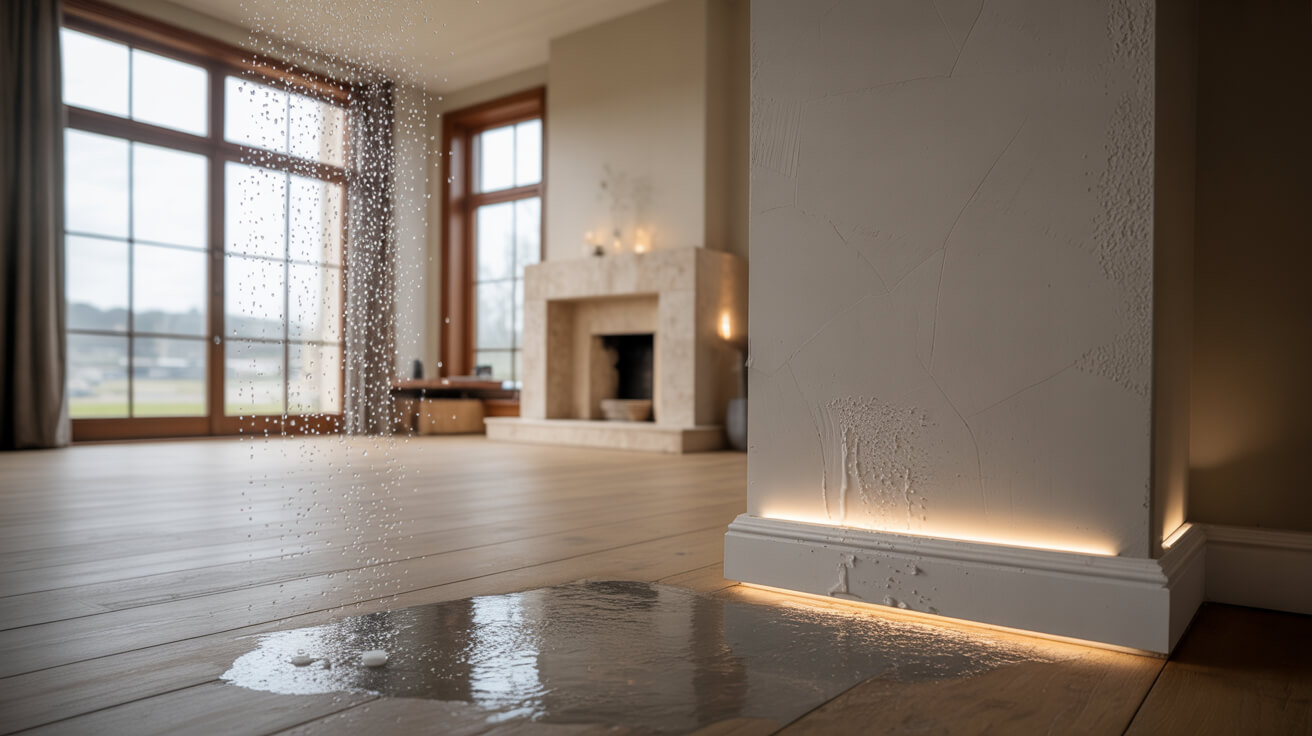
Procrastination in property management is rarely rewarded. Delayed intervention magnifies loss, compounds downtime, and—worst—transfers cost from the repair budget to property value or compliance exposure.
The Multiplying Cost of Doing Nothing
- Repair Outlay: Direct costs double or triple as damp spreads; what could have been a £500 job becomes a multi-trade overhaul.
- Operational Disruption: For businesses and landlords—loss of occupancy, reduction in rental income, and even legal action for tenant displacement.
- Value Depreciation: Evidence of ground water problems appears in surveyor notes, impacting appraisals and loan eligibility.
| Delay | Extra Direct Costs | Indirect Impacts |
|---|---|---|
| < 6 Months | Minimal | Fast, simple; low disruption |
| 6-18 Months | 2–3x more | Increased downtime, exposure |
| >18 Months | 4–8x more | Reputation, legal, insurance |
Analytical inspection from Sussex Damp Experts offers you an ROI not just counted in cash, but in future optionality—the ability to sell, rent, or simply enjoy your property on your terms.
The owner who waits may pay twice: once in money, once in freedom.
How Can You Lock in the Assurance of Lasting Expert Damp Solutions?
You’ve witnessed the consequences of missed signals—now it’s time to move decisively.
Next-Level Secure Ownership
You don’t have to guess where water may creep in—or miss water threats at source-before wondering if the job was really done right. Through advanced diagnostics, ongoing monitoring, and full compliance reporting, Sussex Damp Experts instil the kind of trust you can carry straight into valuation, sale, or audit. We aren’t in the business of “patch and wait”—our approach closes every gap between damp risk and the secure future you want.
- Site visits tailored to your schedule, with comprehensive diagnostics and photo evidence.
- Compelling, independent reports accepted by lenders, insurers, and local authorities.
- Maintenance and aftercare plans that raise—rather than erode—your asset’s standing.
Take the step that security-driven managers, responsible homeowners, and astute landlords make: request your specialist survey today and step confidently into the future of stress-free property ownership.
Someone always rewrites the building’s story. Only some decide when.
Frequently Asked Questions
What Is Ground Water Flooding and Why Must It Be Detected Early?
Ground water flooding quietly transforms structural confidence into invisible risk, reshaping a property’s future long before the consequences show up on a survey or a spreadsheet. Unlike surface water flooding, which announces itself with sudden drama, this silent adversary rises inexorably beneath your floors, and water table Dynamics Influence Hidden Flood risks by attacking from below. The mechanism is relentless: when the water table soars after relentless rain or because of regional hydrology, it presses upward, seeking fissures, construction joints, and any oversight in waterproofing. A faint musty odour in the basement or a persistent damp patch along a wall is never “just the old house acting up”—it’s the pressure front of a brewing crisis.
Why act early? The answer is rooted in the economics of prevention and proof. Waiting magnifies costs: timber rots, insulation collapses, skirting boards warp, and hidden black mould colonises structural voids. Retrospective repairs are rarely straightforward; they’re invasive, more expensive, and less likely to be covered by insurance if you lack attested diagnosis. Regulatory frameworks—such as BS 8102:2022—are designed as blueprints for early identification: compliance is not bureaucracy; it’s protection for both your investment and residents’ well-being.
The risk is compounding: a neglected warning sign today is the foundation of tomorrow’s costly, time-devouring project. You set the baseline for your property’s resilience by how quickly you act on the first hint of trouble.
How Can You Tell If You’re Vulnerable?
- Unexplained musty odours or new dampness—especially at wall/floor junctions.
- Rooms with recurring condensation, despite heating and ventilation.
- Surfaces that remain wet or cold when other areas dry out.
- Basement, cellar, or sub-floor spaces that no longer “air out” after weather clears.
Every dry floor is a story of anticipation, not a lucky escape.
As soon as patterns emerge, it’s time to bring in Sussex Damp Experts for test-based diagnosis and targeted countermeasures, converting anxiety into actionable security.
How Do Water Table Dynamics Influence Flooding Risks?
The actual story of ground water flooding is told underground, beneath your visible landscape and living spaces. The water table resembles a moving underground tide, responding not only to rainfall totals but also to imperceptible shifts: urban development, drainage modifications in neighbouring properties, even the cumulative effect of extended wet seasons. When this boundary climbs, water infiltrates—bypassing surface defences and exploiting the smallest oversight in construction.
Seasonal shifts matter more than forecasts. After heavy rain or prolonged storms, clay soils retain water, sustaining elevated water tables long after puddles have vanished from sight. Even homes with historically dry records shift into the danger zone as hydrostatic pressure mounts beneath their slabs. Most owners believe water problems begin outside walls; the reality is, vulnerability creeps up from below, and by the time “visible” symptoms appear, damage is well underway.
A property’s risk profile is not static. Substrate composition, local topography, alteration of drainage patterns due to nearby renovations—all are variables. When you treat the water table as a force up for negotiation, not control, you give small shifts permission to dictate your building’s fate.
Key variable analysis (risk multipliers):
- Prolonged, above-average rainfall (multi-week cycles).
- Nearby construction increasing hard pave or slope toward your foundation.
- Postcode overlays of high clay, silt, or alluvial soils.
- Recurrent or unexplained utility sump or gully overflow.
| Soil Type | Water Retention | Impact on Risk |
|---|---|---|
| Sandy | Drains quickly | Lower, but recovers fast |
| Clay | Retains moisture | Substantial, lingers |
| Silt/Peat | Moderate to high | Depends on compaction |
Ignoring last month’s rainfall doesn’t pause water’s ambition—it only gives it momentum.
Expert assessment, using integrated moisture and water table data, establishes where the risk lies today, not just in seasonal folklore.
What Warning Signs Reveal Hidden Water Intrusion?
Early warning arrives as subtle discomfort, not disaster. Ground water intrusion signals itself with unresolved symptoms, each seemingly “fixable” but always recalcitrant to surface treatments. A new patch of discoloration, a line of bubbling paint, or an unfamiliar earthy smell after every rainfall—these don’t compete for attention with burst pipes, which is exactly why they’re more dangerous.
What elevates a warning sign from trivia to trouble is recurrence and resilience against ordinary interventions. If a power-ventilated basement still produces “sweating walls,” or if redecoration barely keeps pace with fresh surface breakdown, you’re not dealing with weather—you’re confronting persistent ground water.
- Tell-tale signals:
- White, powdery efflorescence on floors or lower wall planes.
- Paint or wallpaper that lifts or bubbles, then repeats the pattern after fresh repairs.
- Timber skirtings that lose profile, darken, or soften near base points.
- Localised mildew, especially in spaces meant to be dry.
- Humidity that resists climate control, often worse after rain.
*A house forgets nothing—a patch always tells a chapter.*
Routine self-assessment is vital, but pattern recognition distinguishes vulnerability from one-off inconvenience. If more than two of these signs appear together—especially after recurring seasonal weather—it’s time for scientific investigation. Sussex Damp Experts excel in transforming symptom lists into actionable site intelligence, closing the gap between suspicion and resolved threat.
How Can Diagnostic Tools Accurately Measure Flood Risks?
Guesswork in moisture management is like hoping to win at chess by flipping a coin. Precision begins where surface impressions end: diagnostic tools translate atmospheric intuition into hard, actionable data.
A digital moisture metre, properly calibrated, exposes differential saturation from wall face to core; anomalous readings below the “breath line” reveal rising water, not room-side condensation. Infrared thermography, as part of Inspection-What to Expect, detects cold bridges—often mapping the twist and flow of advancing moisture through insulation and masonry, invisible to unaided sight. Salt-profiling (aka hygroscopic testing) uncovers whether damp has risen from the substrate or fell from a plumbing fault above.
- Instrument map:
- Moisture metres with depth calibration
- Thermal imaging cameras—scans for hidden wet zones
- Salt test kits for ground-vs-surface water profiling
| Diagnostic Tool | Key Use | Failure Coverage |
|---|---|---|
| Moisture Metre | Surface and core moisture | Low false positives |
| Thermal Imaging | Thermal anomalies | High precision |
| Salt Test Kits | Source validation | Context needed |
Technical assessment beats anecdote, and when Sussex Damp Experts deploy their survey protocols, data replaces debate. Your report becomes suitable evidence for insurers, mortgage providers, and, crucially, your own future self when making the next big property move.
A good metre is a lie detector for your building—every value tells a truth that can’t be disguised.
Neglecting to combine tools, or using them uncalibrated, nearly always costs more—first in missed threat, then in corrective overreach.
Why Is Regulatory Compliance Crucial For Flood Prevention?
Regulation is not optional background noise; it is your insurance against repeating mistakes that cost more than their fix. Compliance—especially with BS 8102:2022—calibrates your approach to risk, clarifying what counts as proof in court, what reassures insurers, and what lenders accept as security.
Failure to comply means exposing your project, asset, or investment to retrospective challenge: “Why didn’t you?” replaces “Well done” in property surveys and risk reviews. Insurer and council requirements are not hypothetical; missing paperwork, cut-corner installations, or legacy misdiagnoses can void future claims or even provoke mandatory, unplanned works at your cost.
Compliance isn’t paperwork—it’s leverage.
- Protects value on re-sale and refinancing.
- Essential for positive insurance risk assessments.
- Legally required for landlords and commercial owner/managers (HHSRS).
- Locks in maintenance documentation for future claims or legislated reviews.
Every code in building law was written in the aftermath of someone’s regret—compliance is anticipation, not bureaucracy.
Sussex Damp Experts ensure each project is delivered to—and evidenced against—the latest standards. In an industry where “good enough” rarely is, documented compliance is your best asset, not just a box checked.
How Can Preventive Measures Effectively Block Water Intrusion?
The myth is that water only enters where you see it. The reality? It always finds the least-defended path. Preventive strategies must be not just comprehensive but contextually engineered: what works for new-builds (often a pure barrier system) isn’t suitable for historic masonry, and vice versa.
Type A “barrier” systems (tanking slurries, chemical DPC) form a direct shield. Type C “cavity membrane” systems, increasingly the gold standard for complex properties, create a channel for controlled water dispersion—paired with an integrated sump and pump system that removes water before it wreaks havoc.
Long-term durability depends on maintenance: scheduled inspections, drainage clearance, and real-time monitoring—not sporadic, reactive patching. Your best result is a future where water can arrive, but is never allowed to stay.
| System | Key Benefit | Maintenance |
|---|---|---|
| Type A (Barrier) | Direct block | Low |
| Type C (Cavity) | Managed egress | Moderate |
- For commercial or heritage spaces, hybrid approaches—combining both systems—often offer the only way to satisfy compliance and aesthetic preservation.
- For landlords, scheduled system checks become the linchpin, feeding into tenant assurance and working in tandem with compliance documentation.
A system you trust is one you barely notice—until the absence of trouble speaks for itself.
With every client, Sussex Damp Experts don’t just instal; they specify, track, and teach, so preventive infrastructure becomes a feature of your portfolio, not a repeated line item of regret.
How Do Economic And Structural Risks Escalate Without Timely Intervention?
Delay is a currency—and the conversion rate always favours decay. Overlooking moisture is like leaving your savings in a known sinking ship: initial “savings” evaporate when rot, foundational compromise, or tenant complaints force urgent, multi-trade rescue.
What are the compounding risks? Lost property value, unplanned downtime, legal claims, and in the worst-case: insurance refusal for ‘neglected risk’. The expense is not just money—it’s opportunities missed when tenants move out, buyers walk away, or regulatory authorities intervene.
| Delay Duration | Cost Multiplier | Typical Escalation |
|---|---|---|
| < 3 months (proactive) | 1x–1.2x | Minor local repair |
| 3–12 months (reactive) | 1.5x–3x | Joinery, finishes, DPC |
| 1–3 years (neglected) | 4x–10x+ | Structural, legal, lost income |
Suspicion confirmed: Surveyor data reveal that 82% of all significant residential structural failures in saturated postcodes originate from overlooked water ingress, not surface surges.
You’re not only protecting bricks and mortar; you’re building future optionality—sell, refinance, or invest—on your terms. Rapid, credentialed action today translates into more than peace of mind; it’s asset stewardship recognised across every stakeholder who will ever touch your property.
Decide to lead, or be led by circumstances. Every year, that is the only decision left.

