
 By
 March 17, 2026


Do you need faculty approval for deathwatch beetle treatment?
If you are only treating timber and not replacing it, your work may be List B; replacement or character-affecting work usually needs a faculty.
Under the Faculty Jurisdiction Rules 2015, treatment of timber against beetle or fungal activity can fall within List B, which means archdeacon’s written permission rather than a full faculty, but only where the work does not involve timber replacement. Once your proposal moves into replacement, visible alteration, or wider repair that could affect the character of a listed church, you are normally in full faculty territory.
Church of England churches sit within a different heritage-control system from most listed buildings. Because of the ecclesiastical exemption, you do not usually apply for listed building consent for church works. Instead, you work through faculty jurisdiction, the Church of England’s legal system for managing change to church buildings, their contents and churchyards, as Talk to your DAC about permissions explains. Deathwatch beetle work is never just pest control in a historic church. It can involve significance, moisture defects, structural integrity, bats and public scrutiny.
When treatment alone qualifies as List B
List B is the likely route when your proposal is confined to treatment and does not require timber replacement.
If your survey shows active insect attack but the timber remains repairable without loss of historic fabric, you may be able to seek List B permission. In practice, that means a tightly defined scope: identify the affected timbers, explain why treatment is needed, confirm that no timber is being replaced, and show that the method will not alter the building’s character. A vague instruction to “treat all roof timbers” is rarely enough. List B works still need evidence and written permission. They are not informal works.
You may recognise the moment. You notice fresh dust beneath a vestry beam and your first instinct is to call for spray treatment before the next service weekend. That is where many projects go wrong. Before anyone starts, you need to know whether you are proposing treatment only or a repair package that crosses into replacement or alteration.
“We thought we needed a spray treatment straight away, but once the survey showed damp, old holes and a likely bat roost, it became clear that permissions and diagnosis had to come first.” — a churchwarden in East Sussex, parish church
When you need a full faculty petition
You usually need a full faculty when beetle damage leads to timber replacement, broader repairs or any proposal affecting the church’s special interest.
That threshold matters because deathwatch beetle often appears alongside damp, fungal decay or long-term water ingress. Once you start opening up floors, replacing decayed oak, altering supports, or combining repair with wider reordering, the scope changes. The insect problem may be real, but the permission question turns on the whole scheme, not the beetle alone.
A practical rule helps. If your proposal is genuinely treatment only, you may be in List B. If it is really treatment plus repair, treatment plus replacement, or treatment plus reordering, ask your DAC to treat it as a faculty question from the outset. That may feel slower, but it is usually better stewardship. You avoid wasted specifications, premature contractor instructions and the risk of having to unpick work that was never properly authorised.
| Type of work | Usual route | Key trigger |
|---|---|---|
| Monitoring, moisture readings, non-invasive investigation | Usually no faculty route on its own, but confirm locally | No alteration to fabric |
| Timber treatment only, no replacement | Often List B | Written archdeacon permission needed |
| Local repair with no heritage impact | Depends on scope and diocese | Check with DAC early |
| Timber replacement | Full faculty likely | Loss of historic fabric |
| Wider repair or reordering linked to infestation | Full faculty likely | Character and significance affected |
How the faculty application process works

The faculty process starts with your DAC, becomes formal once your scope is fixed, and ends with archdeacon or chancellor approval.
It is not one form. It is a sequence: early advice, a defined project, PCC agreement, submission through the Online Faculty System where used, DAC review, and then either archdeacon permission for List B or the public notice and chancellor decision route for faculty cases. The key point is simple: talk to your DAC first.
Starting with the DAC
Your DAC is the first body you should speak to because it helps you identify the right route and the right evidence.
That early conversation saves time. The DAC can tell you whether your scheme looks like List B or full faculty, whether your church’s listed status raises extra issues, whether consultees such as Historic England may need to be involved, and whether your initial treatment idea is likely to be acceptable. If your quinquennial inspection has already identified beetle attack, your inspecting architect or surveyor will often turn that note into a permissions-ready scope. Listed church proposals usually also need a statement of significance and a statement of needs.
Church guidance also makes the DAC secretary’s role sound less forbidding than many readers expect.
“The secretary is there to help all; from those unfamiliar with Faculty Jurisdiction to those seeking straightforward advice on basic housekeeping and maintenance.” — Stephen Challenger, Hereford Diocese
Once your scope is clear, your PCC needs to agree what it wants to do and why. A faculty application is not just a contractor quotation uploaded into a portal. It is a justification for change to a protected building. If your proposal is weakly defined, the DAC cannot advise well. If your PCC has not settled the scope, the application often drifts or stalls.
The public notice period
A full faculty application normally includes a 28-day public notice period, and that notice is a legal stage, not a formality.
After the DAC issues its formal advice on a faculty case, the public notice has to be displayed inside and outside the church for 28 consecutive days, with plans and supporting material available for inspection, as How we manage our buildings explains. Only then does the petition move on for determination by the chancellor. If there are objections, matters can become slower and more detailed. If there are none, the case is usually simpler, but the notice stage still has to happen.
You may know this feeling. A treatment report lands on your desk and the project suddenly feels ready to start. It usually is not. You still need a settled specification, drawings if fabric is changing, PCC approval, DAC input and, for faculty cases, the notice period before any lawful work begins.
| Stage | Who acts | Typical duration |
|---|---|---|
| Early advice and route check | PCC, architect/surveyor, DAC | Variable |
| Scope and supporting documents | PCC and advisers | Variable |
| DAC review / Notification of Advice | DAC | Variable by diocese |
| Public notice for faculty cases | Parish | 28 days fixed |
| Chancellor decision | Registry / Chancellor | Variable |
You save time by defining the scope correctly at the start. A beetle treatment project that remains treatment-only can stay relatively contained. A project that starts vague and grows into structural repair usually loses more time in revision than it would have lost through early clarity.
Building your case — survey evidence the DAC expects

The strongest application proves what insect is present, whether the attack is active, how far it extends, and whether the timber remains sound.
That evidence turns suspicion into a faculty-compliant proposal. Deathwatch beetle can look dramatic because old exit holes, hollowed sapwood and accumulated dust suggest ongoing failure even when the infestation is historic. The Death watch beetle – Fact sheet No 3 is clear: holes do not mean that the infestation is active. Fresh frass, spring emergence and timber moisture readings matter more than old damage alone.
Proving active infestation
A deathwatch beetle survey should distinguish active infestation from historic attack before anyone specifies treatment.
A competent survey covers species identification, fresh versus old flight holes, frass character, likely breeding conditions and the moisture environment around the timber. Deathwatch beetle larvae may take 4 to 12 years to mature, and the insect is strongly associated with damp or water-damaged hardwood, particularly oak. New holes tend to look fresh and sharp. Fresh frass gathers below active emergence points. Spring and early summer observations are especially useful because adult emergence is seasonal. If timber moisture content is above 16%, breeding conditions are more favourable.
You may already have a report saying “woodworm present throughout.” That is not enough. The DAC does not just need a label. It needs a diagnosis. Which timbers are affected? Is the attack active? Is the risk local or widespread? Is the underlying issue rainwater ingress, chronic condensation, poor ventilation, defective flashings or historic damp that has now dried out? A good survey narrows the answer. A poor one makes everything look urgent, as Timber Treatments and Pest Control explains.
| Sign | What it may mean | Why it matters for approval |
|---|---|---|
| Old dark holes | Historic attack | May not justify treatment |
| Fresh sharp-edged holes | Recent emergence | Supports active infestation case |
| Fresh frass | Current activity likely | Stronger evidence for intervention |
| Dead adults in spring | Recent emergence nearby | Helps confirm timing and location |
| High moisture readings | Suitable breeding conditions | Points to damp source needing correction |
Structural assessment requirements
The survey must also show whether the infestation is superficial, locally repairable or structurally significant.
Visible outer damage does not automatically mean wholesale timber failure. In many historic roof structures, the strength lies in the heartwood, and minor outer damage may not require major intervention. Equally, where fungal decay has modified the timber or moisture has been present for long periods, apparently limited insect damage can sit alongside more serious loss of strength. Your survey therefore needs mapping, probing where appropriate, and a clear structural opinion, usually from your architect, surveyor or structural engineer if the timbers carry meaningful loads.
If you can prove the issue is active but local, your application can stay proportionate. If you cannot prove activity, or cannot separate insect attack from broader damp and decay, the project becomes harder to justify and harder to classify.
Treatment methods and conservation constraints
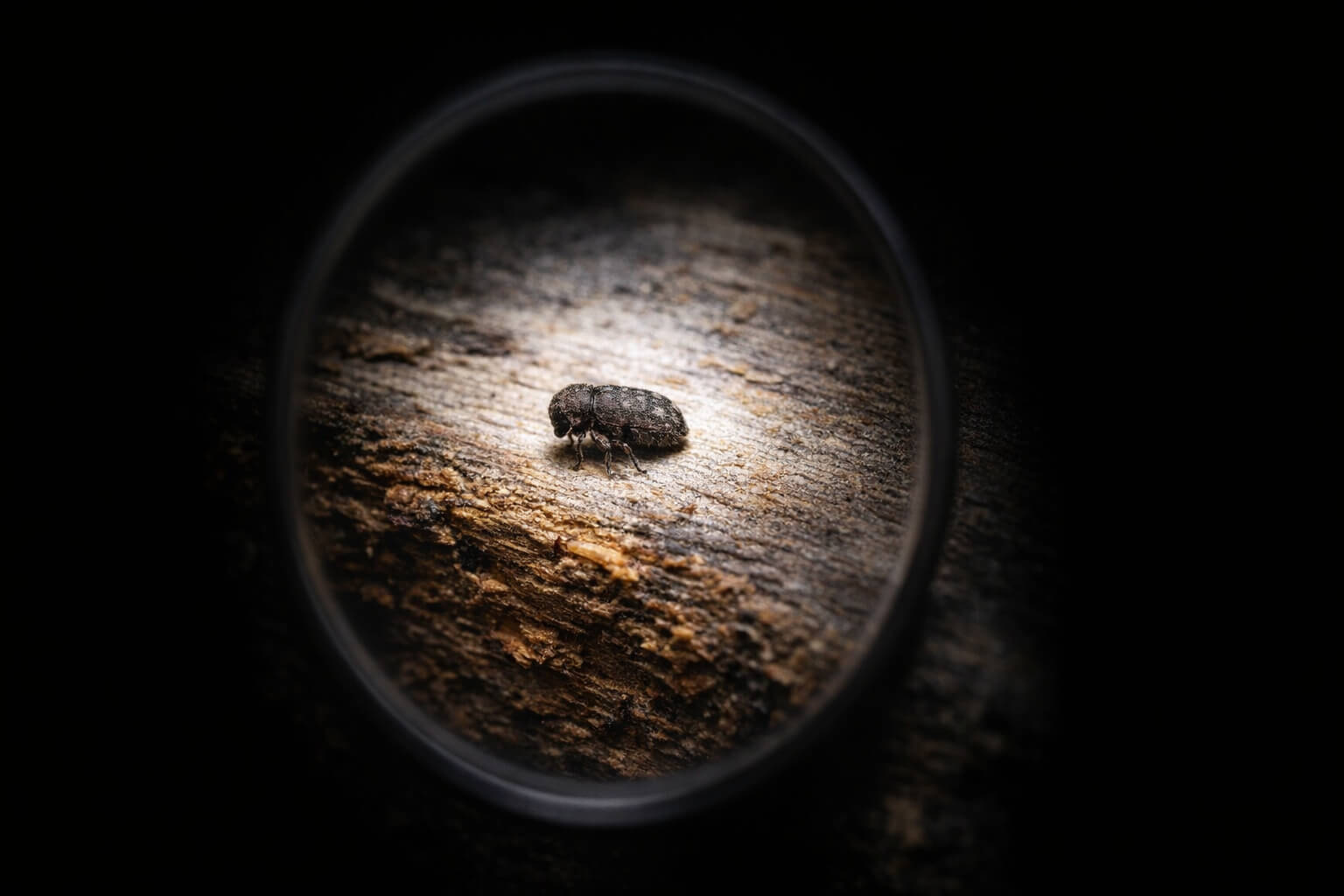
The DAC cares about treatment method because method affects heritage impact, reversibility, building health and, sometimes, whether the proposal is lawful.
In a church, approval is not simply about whether a product kills insects. It is about whether the method is necessary, proportionate and compatible with a protected historic building. Treatment may not be necessary at all, and where rot or insect attack is linked to moisture, the first job is to stop the water ingress and allow the timber to dry before deciding what further work is needed.
Chemical vs environmental approaches
A conservation-led hierarchy starts with moisture control, then selective repair, and only then justified chemical treatment.
Environmental control often means repairing roof defects, improving rainwater disposal, reducing trapped moisture and restoring ventilation. In many cases, that is the intervention that actually changes the outcome. If you replace timber or apply chemicals without dealing with the damp source, you have treated the symptom and left the cause in place.
Where active infestation is proven, localised chemical treatment can still have a place. Boron-based systems, pastes, rods or carefully controlled applications may be suitable in some contexts. What tends to attract more concern are broad-brush approaches such as fogging, “bombs” or heavy solvent systems, especially in enclosed roof spaces. They may expose more fabric than necessary and be harder to defend in a significance-led decision. Retain before replace is usually the stronger conservation argument. Treat only what genuinely needs treatment. Repair what can still serve. Replace only where loss of strength or decay makes retention unreasonable.
When bats complicate the picture
If bats are present or suspected, timber treatment becomes both a conservation issue and a wildlife-law issue.
If bats may be present in roofs and other concealed spaces, treatment specifications need more care. You cannot assume that standard chemicals are acceptable in or near a roost. Product choice, timing and survey evidence may all change.
Jo Ferguson of the Bat Conservation Trust makes the practical point clearly in the Webinar on Building Works and Bats.
“Just because bats have not been seen, it doesn’t mean that absence has been confirmed.” — Jo Ferguson, Bat Conservation Trust
This is where an apparently simple timber-treatment specification can collapse. You commission a contractor. The contractor proposes a standard treatment. Then someone asks the obvious question: are there bats in the roof? If the answer is “possibly,” your programme changes. You may need a bat survey, a different product, a different season, or a licensed ecologist’s input. That is not overreach. It is why early, joined-up diagnosis matters.
Common mistakes that delay or derail faculty applications

Most delays come from misclassifying the work, under-evidencing the problem, or specifying treatment before you understand the building.
The first mistake is starting too soon. You should not start work before you have the right permission in writing. Even if frass is visible and the pressure feels real, unauthorised treatment is still unauthorised treatment.
The second mistake is treating old holes as proof of active infestation. Deathwatch beetle leaves a long visual memory. Old holes, old frass and old anxiety can linger for years. If your report does not distinguish historic from active attack, your case starts weak.
The third mistake is using an over-broad specification. “Treat all affected timbers” is not a faculty-ready scope. It does not define extent, method, cause or heritage impact. A better application names the locations, the evidence of activity, the proposed treatment system, the moisture defects being corrected and whether any replacement is involved.
The fourth mistake is ignoring the shift from treatment to repair. A project may begin as List B in conversation and end as a faculty case because the contractor discovers decay, loss of bearing or the need for new timber. If your project has crossed that line, your paperwork has to cross it too.
The fifth mistake is forgetting bats until the last minute. In churches, that is expensive. Standard chemical assumptions are not enough where roosts may be present. If you leave the bat question until after the method is chosen, you may have to re-specify the whole job.
The sixth mistake is weak PCC engagement. A faculty application is not just technical evidence bolted to a contractor quote. It is your church’s formal case for change. If the PCC has not resolved the scope, or if the reasons for the work are only implicit, the application often feels underpowered.
The seventh mistake is treating the 28-day notice as an inconvenience rather than a legal stage. For faculty cases, it is part of the permission process. Missing it, shortening it or handling it carelessly creates avoidable delay.
Getting expert support for faculty-compliant beetle treatment

You need more than a treatment quote; you need a report and method that make sense to your DAC, your architect and your building.
That usually means joining up timber diagnosis, moisture diagnosis and permissions logic. If you are dealing with deathwatch beetle in a church, the strongest route is rarely the quickest-looking one. It is the route that proves activity, identifies the damp mechanism, respects historic fabric and classifies the work correctly before anyone starts. That protects both the building and the project.
At Sussex Damp Experts, we approach church and heritage timber problems the same way we approach any sensitive historic fabric: diagnose first, intervene second. We assess moisture sources, inspect timber condition, define the extent of active risk and prepare reports that support a proportionate specification. Your position becomes clearer. Our role is to give you evidence and a treatment rationale. Your outcome is a stronger basis for DAC discussion and a lower risk of over-treatment.
“Our approach is to diagnose the moisture source, confirm whether the infestation is active, and prepare a treatment specification that supports your faculty route instead of complicating it.” — our heritage surveyor, Sussex Damp Experts
That support is most useful while the scope is still being shaped. We can work alongside your inspecting architect or surveyor, help separate active infestation from historic damage, and frame a treatment strategy that respects the faculty threshold. If your project remains treatment-only, that can help you support a List B route. If the survey shows that repair or replacement is unavoidable, you have the material you need to move into a faculty application without pretending the job is smaller than it is.
You do not need the faculty system to be simple. You need it to be navigable. When your survey evidence is sound, your moisture diagnosis is honest and your specification is conservative in the best sense of the word, the process becomes easier to manage. If you want that clarity, Sussex Damp Experts can help you move from beetle concern to a faculty-compliant plan that protects your church with proper care.
[WORD COUNT: 2863]
Frequently Asked Questions

How can you pay for deathwatch beetle surveys, repairs and faculty-related church costs?
You usually need to plan for several separate cost lines, because beetle work in a church is rarely just one contractor invoice. Your budget may need to cover investigation, professional advice, permissions, treatment, repair, access equipment and follow-up monitoring. If you treat it as a single “timber treatment” cost, you can end up underfunded before the project even reaches site.
In practice, your costs often fall into five groups:
– Diagnosis — timber survey, moisture investigation, structural input, and sometimes laboratory identification
– Professional support — architect, surveyor, engineer, ecologist, conservation consultant
– Permissions and administration — faculty-related paperwork, drawings, consultation material, and sometimes legal or registry costs
– Works on site — treatment, local repairs, access scaffolding, opening-up, making good
– Aftercare — monitoring, further inspections, environmental checks, record updates
Funding can come from more than one place. Some churches use unrestricted PCC funds for surveys and urgent professional advice, then fund the physical works through appeals, grants, restricted fabric funds or diocesan support. Some capital funds can only be used for repair, not broader reordering, so you may need to separate the beetle-related repair element from non-repair elements in your cost plan. That separation matters if your infestation has become part of a larger project. It also matters because some funding will support repair works but not every associated cost. Professional fees, legal expenses, faculty-related administration, or preliminary investigation may be only partly eligible or excluded altogether, so you need to read criteria line by line rather than assume the whole package will be covered.
You should also check whether VAT support is available for eligible works. The Listed Places of Worship Grant Scheme has historically helped many churches reclaim VAT on qualifying repair works, although scheme rules and availability change over time. If your project involves specialist conservation, you may also find small targeted grant opportunities through church heritage funds, county historic churches trusts, or denominational conservation programmes.
If your church can afford investigation but not the subsequent works, that is still a useful place to start. A sound survey can help you define the true scope, separate urgent items from lower-priority repairs, and build a phased funding case rather than a single overwhelming appeal. We usually advise splitting your budget into survey now / permissions next / works later. Your outcome is a project that can move in stages instead of stalling because the first estimate tried to do everything at once.
What happens if your PCC carries out beetle treatment without the right faculty or List B permission?
Unauthorised work can create a legal, financial and governance problem long after the treatment itself is finished. If your PCC allows beetle treatment or related repairs to go ahead without the correct permission, the issue is not only whether the work was sensible. The issue is that it may have been done unlawfully under the faculty jurisdiction.
The consequences vary with the scale of the work, but they can include:
– pressure to submit a retrospective application
– challenge from the registry, archdeacon or chancellor
– questions from insurers, grant funders or auditors
– difficulty defending the works if harm has been caused to historic fabric
– extra professional fees to document, explain or justify what was done
– reputational strain inside the parish if the works were controversial
Retrospective permission is not a fallback strategy. It can be harder to obtain than permission in advance because the decision-maker is no longer judging a proposal; they are judging completed works and any harm already done. If historic timber has been removed, sprayed unnecessarily, or altered in a way that was avoidable, you may have limited ability to put things right. Even where the treatment itself was technically reasonable, the lack of permission can still create a serious process failure.
There is also an internal governance point. PCC members are custodians of church property, not just project managers. If you approve works outside the correct route, you expose your church to avoidable conflict. That can affect relationships with your DAC, your architect, your congregation and any grant body you later approach for help with the next phase.
If work has already started, your best move is honesty and speed. Stop non-essential works, gather the contractor documents, photographs and scope records, and speak to your diocesan authorities immediately. Record retention matters more than many churches realise. Invoices, method statements, product data sheets, before-and-after photographs and any emails agreeing the scope may become essential if your church later has to explain exactly what was done, by whom, and on what basis. We can help you document the current condition and organise the evidence. Your outcome is not a guarantee that the problem disappears. It is a better chance of regaining control before a permissions issue becomes a much larger dispute.
How long does the full process usually take from first survey to approved treatment?
You should usually think in months, not weeks. Even when a project seems straightforward, the real timetable includes investigation, internal decision-making, permissions, possible consultation, contractor programming and, sometimes, ecological or seasonal constraints. That does not mean every case is slow. It means your programme needs to reflect how church projects actually move in practice, especially once specialist access and listed-fabric decision-making are involved.
A realistic diagnosis-to-start timeline often looks like this:
- Initial concern to first survey: 1 to 3 weeks if access is simple; 4 to 6 weeks if towers, roofs or specialist access are involved
- Survey review and scope definition: 2 to 4 weeks for straightforward cases; 4 to 8 weeks if your architect, engineer or ecologist also needs to comment
- PCC decision and permissions preparation: 2 to 6 weeks, but longer if your meeting cycle is monthly and papers miss an agenda deadline
- List B route: often several weeks once the scope is tight and supporting documents are ready
- Full faculty route: commonly 2 to 4 months before approval, sometimes longer where consultation, objections or revised drawings are needed
- Post-approval contractor start: 2 to 12 weeks or more, depending on scaffolding, workload and whether your chosen firm is used to heritage work
Unexpected delay usually comes from a few repeat causes. Bat survey season can hold things up if the question is raised late and ecological evidence has to be refreshed at the wrong time of year. DAC meeting frequency matters because some dioceses review cases on a committee rhythm rather than continuously. Contractor availability can be surprisingly tight where your church needs heritage-aware joinery, scaffold design around monuments, or treatment work in difficult roof spaces. Another common delay appears when the original survey identifies “treatment,” but the opening-up later reveals broader repair, forcing the scope back into design and permissions review.
You can shorten the process by front-loading the right work. We help with that by defining the infestation clearly, separating urgent from non-urgent items, and producing a report your architect and DAC can act on. Your outcome is not instant approval. It is a programme with fewer false starts, fewer surprises and fewer avoidable pauses between diagnosis and lawful treatment.
Will your church insurance cover deathwatch beetle damage, and does faculty status affect a claim?
Insurance cover for beetle damage is often more limited than church teams expect. Many policies distinguish between sudden insured events and gradual deterioration, and insect attack usually falls into the second category. That means your insurer may not pay for the underlying damage itself, especially if it developed over time. However, some associated costs may still be relevant depending on the policy wording and the event history.
Three distinctions matter:
- Gradual infestation or decay — often treated as maintenance or wear-related, and commonly excluded
- Resulting damage from a separate insured event — for example, storm damage causing water ingress that then exposes or accelerates a timber problem
- Emergency stabilisation or professional costs — sometimes recoverable in part if there is an immediate risk tied to an insured peril
Faculty status matters because insurers expect lawful building management. If a claim involves repairs to a church building and you have not followed the correct permissions route, that can complicate the handling of the claim. It does not automatically void cover, but it can create awkward questions: Were the works authorised? Was the scope appropriate? Did the church follow conservation and governance requirements? If unauthorised work changed the building before the loss was documented, that may make causation harder to prove.
Your first step should be to notify the insurer early, even if you are not sure the policy responds. Give a factual account: what was found, where, when, and whether there is a linked event such as storm ingress or sudden failure. Do not overstate certainty. Do not let the contractor frame the insurance narrative. Get the wording, read the exclusions, and ask specific questions about investigation costs, emergency shoring, water-ingress links and professional fees. Policies vary widely, so you should rely on your own church’s schedule, wording and endorsements rather than assumptions drawn from another parish’s experience.
We can support that stage by documenting condition, likely causation and the difference between active infestation, historic damage and moisture-related deterioration. Your outcome is a clearer claim file and a better basis for deciding whether you are dealing with an insurance matter, a repair liability, or both.
What can you do if there is immediate structural danger and you cannot wait for the normal faculty process?
If a timber is at real risk of failure, your first priority is safety, not paperwork sequencing. That does not mean you bypass the faculty system casually. It means you move into an urgent-risk response, document the danger properly, and involve the right church authorities at once so the emergency action stays defensible.
The practical order is usually:
– make the area safe immediately — isolate access, stop use below the risk zone, and prevent avoidable loading
– get urgent professional evidence — an architect, surveyor or engineer should confirm the nature of the risk
– contact diocesan authorities straight away — archdeacon, DAC office, registry or whoever your diocese directs for urgent cases
– carry out only the minimum work necessary to remove immediate danger — propping, temporary shoring, controlled exclusion, weather protection
– record everything — photographs, professional notes, contractor attendance, dates, and exactly what was done
The key distinction is between temporary emergency stabilisation and full repair. If a beam is dropping, a floor is becoming unsafe, or a bell-frame element is close to failure, temporary support may be justified quickly. Full opening-up, timber replacement, broad treatment or redesign usually still needs the proper route once the immediate danger is controlled. Emergency powers are not a shortcut for a project that has simply become inconveniently urgent.
A simple example helps. Bolting in temporary needles, erecting a crash deck or propping a sagging beam to prevent collapse is usually a make-safe measure. Cutting out historic timber, inserting a permanent steel solution, or treating an entire roof slope because one bearing end has failed is no longer just emergency stabilisation. That is repair or alteration, and it needs to be treated as such once the immediate danger has passed.
This is where calm documentation matters most. If you can show that the action taken was limited, necessary and proportionate to a genuine safety risk, you are in a far stronger position than if a contractor arrives and starts “sorting it out” before anyone has defined the emergency properly.
We help by separating the make-safe phase from the repair phase. We document the timber condition, confirm what is temporary and what will still need permission, and give your church a clearer handover into the formal process. Your outcome is safer fabric now and a cleaner route to lawful repair next.
What monitoring and reporting should you keep after treatment is finished?
You should treat completion as the start of a new monitoring phase, not the end of the issue. Beetle treatment in a church only makes sense if you can later show whether the intervention worked, whether the moisture conditions improved, and whether the repaired or treated timber has remained stable. Without that follow-up, you are left with a contractor invoice but no real building record.
A good post-treatment record usually includes:
– the original survey and marked-up timber locations
– the approved scope and permissions documents
– product details and treatment method used
– date of application or repair completion
– photographs before, during and after works
– moisture readings at the time of treatment
– any retained samples or opening-up notes
– future inspection points and dates
You should also decide who owns the monitoring task. In many churches, the problem is not lack of goodwill but lack of handover. A churchwarden changes. A PCC secretary changes. A report sits in email. Two years later, nobody knows whether fresh frass in the vestry is new activity or old debris shaken loose by drying timber. A simple monitoring sheet kept with the fabric records can prevent that confusion.
The most useful follow-up pattern is often:
– short-term check after the first season of use or weather exposure
– annual visual review by the parish team
– professional reassessment if moisture rises, frass reappears, or associated movement is noticed
– reference in the next quinquennial cycle so the issue is carried into the church’s formal condition history
Where those records live matters. Your paper file should sit with the church’s fabric or log-book records, not in a private folder that disappears when roles change. Your digital copy should sit in a shared parish location with clear file names, not only in one volunteer’s inbox. We build post-treatment reporting into our work because your building needs continuity, not a one-off intervention. We record what we found, what we did, and what should be checked next. Your outcome is a usable evidence trail. If the timber stays stable, you can show why. If something changes, you can respond early instead of starting from scratch.

