
 By
By  July 19, 2023


Defining Interstitial Condensation—The Hidden Danger in Building Fabric
Moisture issues in buildings often go unaddressed until the visible damage is impossible to ignore. Interstitial condensation, by definition, refers to trapped moisture accumulating inside the layers of a building—between the surfaces you see and the structural elements you depend on. Unlike surface condensation, which leaves obvious marks, interstitial condensation silently undermines your walls, floors, or roof spaces, risking insulation breakdown, hidden rot, and compliance headaches.
How Does Interstitial Condensation Form and Why Is It Overlooked?
Interstitial condensation occurs when internal air, rich in humidity from daily activities, meets a cold surface concealed within the building fabric—such as a cavity wall or beneath insulation. At that point, the dew point is reached, and hidden wall condensation begins to form within the structure rather than on the visible surface. This process is easy to miss in its early stages because it rarely causes surface mould or dampness until structural or thermal performance has already been compromised.
What Buildings Are Susceptible?
- Heritage and listed properties: with retrofitted insulation or moisture-impermeable materials.
- Modern homes: with high insulation levels and minimal ventilation.
- Portfolio-managed or tenanted properties: , where compliance and long-term cost forecasting matter.
The most expensive risks are those hidden beyond your routine repairs.
What Technical Markers Distinguish This Threat?
- Dew point calculation: The critical temperature at which condensation occurs inside the building, invisible to routine checks.
- Hygroscopic salts: Indicators of repeated internal moisture episodes that can compromise internal substrate.
- Compliance standards (BS6576, PAS2035): Benchmarks guiding diagnosis and permanent treatment, used by Sussex Damp Experts for transparent, defensible reporting.
When your property’s health, efficiency, and resale value matter, it’s not enough to look for damp patches. Precision risk mapping and compliance-calibrated surveys reveal the hazards you can’t see—before they rewrite your maintenance budget.
Why Buildings Develop Interstitial Condensation—Causes and Mechanisms

Retrofitting insulation, upgrading windows, or renovating heritage features are all intended to protect your asset. But every improvement that increases airtightness can inadvertently create trapped moisture in the places where it can do the most harm. The building’s airflow and temperature relationships change; vapour journeys that ended as harmless airflow now deposit water in hidden, load-bearing spaces.
Where Do Building Practices and Modern Upgrades Amplify Hidden Moisture?
- Adding internal or cavity wall insulation without corresponding ventilation upgrades.
- Sealing draughty windows or doors, eliminating natural air leakage.
- Blocked airbricks or omitted vapour barriers during renovations.
- Use of impermeable materials (damp-proof paint, modern renders) on historic fabric.
Table: Risk Amplifiers by Upgrade Type
| Upgrade or Practice | Typical Risk Introduced | Prevention Pathway |
|---|---|---|
| Cavity insulation | Vapour entrapment, insulation soak | Balanced MVHR or PIV installation |
| Airtight windows/doors | Reduced passive ventilation | Hygrostatic extractor addition |
| Modern render on heritage | Loss of breathability, trapped moisture | Breathable lime render |
| Omitted vapour barrier | Water migration to cold cavities | Retrofit compatible vapour control |
From Best Intention to Critical Oversight
Every change made to improve comfort or efficiency must be matched by a holistic moisture risk review. Ignoring this has led property owners, landlords, and project managers to face HVAC failures, higher operational costs, and even tenant-led compliance proceedings.
Compliance-centric surveys by Sussex Damp Experts integrate best-practice diagnostics into every project plan, blocking moisture migration before it escalates to hard cost.
How to Identify and Diagnose Interstitial Condensation—Expert Approaches

Spotting the signs of interstitial condensation before it causes major damage is rarely a matter of luck. Early warning signals differ by property, insulation, and maintenance routine, often escaping DIY detection. Professional damp surveyors use scientific tools, proven methods, and regulatory frameworks to uncover and quantify risk.
What Observable Signs Precede Serious Damage?
- Unexplained increase in heating bills.
- Localised cold spots or “damp feeling” walls (without surface staining).
- Occasional, persistent odours even after cleaning.
- Consistent recurrence of minor paint peeling or blistering.
Why DIY Approaches Are Not Enough
Surface-only metres and generic advice miss most subsurface moisture. Events such as minor leaks or inefficient HVAC can set interstitial cycles that require professional-grade, multi-depth moisture testing and thermal imaging to detect. Only insurers and mortgage lenders accept BS6576- or PAS2035-compliant survey evidence when validating long-term property resilience.
Specialist Survey Tools & Methods Utilised by Sussex Damp Experts
- Deep-probe moisture metres: Quantify water presence at every layer of the build-up.
- Infrared thermography: Detects temperature discontinuities and hidden condensation cycles.
- Borehole endoscopes: Allow for visual assessment in sealed cavities.
- Onsite humidity logging: Verifies daily fluctuation cycles that may trigger condensation events.
Surface comfort can hide systemic weakness—only a mapped survey exposes the real stories inside your walls.
When diagnosis counts, results must persuade risk managers, lenders, and compliance auditors alike. That’s why a Sussex Damp Experts survey always concludes with actionable insight, scenario-mapped to your specific risks.
Where Interstitial Condensation Poses the Highest Risk—Property Types and Features
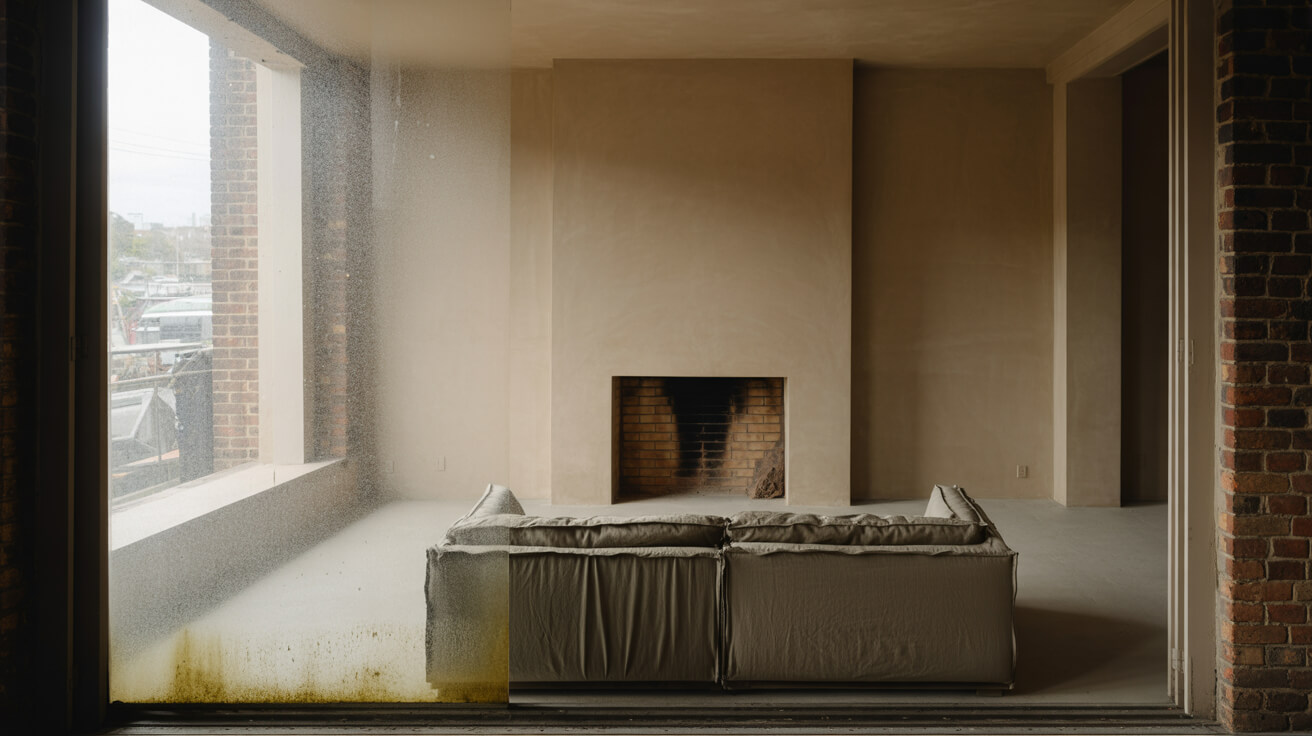
Risk is never evenly distributed. Property types, renovation history, and site-specific climate shape where condensation exploits weaknesses first.
High-Exposure Property Profiles
- Pre-1950s solid wall housing, especially those with interior retrofits or modern renders.
- Cavity wall constructions in zones of high rainfall, exposed orientation, or poor windblown ventilation.
- Heritage or listed status, where patch repairs and incompatible materials compound risk.
- Buildings with flat roofs or crawl spaces below suspended floors.
Table: Property & Systemic Risk Matrix
| Property Type | Common Vulnerabilities | Monitoring Recommendations |
|---|---|---|
| Heritage / Listed | Incompatible materials, hidden voids | Moisture logging; annual audit |
| Modern Retrofit | Air tightness, insulation blocking | Routine thermographic survey |
| Commercial | High internal vapour load, HVAC failures | Ventilation calibration review |
| Timber Frame | Rapid absorption by framing, dry rot cycles | Specialist cavity check pre-purchase |
How Usage and Maintenance Modulate Exposure
- Homeowners who add living space (loft or basement conversions) must check all buried insulation and ventilation paths remain functional.
- Portfolio property managers in coastal Sussex see risks spike when maintaining multi-tenant blocks.
- Commercial operators report business interruption claims tied to moisture-driven HVAC downtime far more frequently after unplanned fit-out works without moisture assessment.
Proactive owners schedule preventative surveys, which function as performance audits and unlock reduced insurance rates.
What Are the Risks and Consequences of Ignoring Interstitial Condensation?

Delay in addressing hidden moisture risk doesn’t buy time; it compounds liabilities. The longer condensation festers between finishes, the more dramatic the fallout for structure, cost, livability, and compliance status.
Escalating Costs and Structural Fallout
- Insulation collapse: Water-saturated insulation erases energy performance gains and accelerates wall rot.
- Joist and timber decay: Load-bearing structures at risk for dry or wet rot events.
- Corrosion of ties, bolts, and window/door fixings: Systemic degradation, often necessitating invasive rebuilds.
Table: Projected Cost Ranges by Inaction (2024, Sussex Region)
| Fault Ignored | Common Remedial Works | Typical Repair Cost Range |
|---|---|---|
| Insulation failure | Insulation replacement, cavity clearing | £2,500 – £8,000 |
| Joist/timber rot | Timber replacement, wall rebuild | £6,000 – £25,000 |
| Widespread corrosion | Structural tie/bolt replacement | £4,000 – £15,000 |
| Regulatory investigation | Expert reporting, remedial works | £2,500 + fines |
Health, Compliance, and Lending Ramifications
Unresolved interstitial condensation frequently triggers:
- Tenant health claims—especially relevant for landlords and managing agents.
- Voided building warranties and blocked insurance payouts.
- Failed mortgageor valuation surveys, delaying or collapsing sales.
- HHSRS enforcement or urgent compliance orders from local authorities.
You don’t have to see the damage for regulators or insurers to identify it.
Permanent asset protection demands active, not reactive, risk management. Sussex Damp Experts’ scenario mapping ensures you remain one step ahead—restoring not only structure, but secured compliance and stakeholder confidence.
How Can Interstitial Condensation Be Prevented and Remediated for Good?

No universal formula exists for removing systemic moisture threats. Each solution is matched to your property’s design, use profile, and compliance landscape. Preventive measures led by accredited professionals preempt insurance, legal, and capital value risks for all stakeholders.
Stepwise Prevention and Remediation Strategies
- Calibrate ventilation with building envelope upgrades. PIV and MVHR systems neutralise hidden moisture cycles.
- Retrofit and instal insulation using calculated dew point mapping—never by rote.
- Seal known cold bridges and structural gaps, especially around windows, lintels, and service penetrations.
- Specify only vapour-compatible membranes and finishes wherever insulation is in play.
- Schedule annual risk audits and humidity data log installation for high-exposure sites.
Best Practice & Certification Signals
- All remedial works delivered according to BS6576, PAS2035, or specialist heritage guidance.
- Accredited surveyor sign-off for insurance, lending, and compliance protection.
- Ongoing support through moisture loggers or post-repair audits—so you catch new issues before they become liabilities.
Bulletproofing structural health means not just patching visible faults, but neutralising hidden risks with process-substantiated, insurer-ready evidence. This is the Sussex Damp Experts standard.
When Should You Take Action? Warning Signs That Demand Immediate Professional Support

Your opportunity to avoid high-cost repairs or compliance trouble is directly tied to response speed. The following scenarios signal the moment to act:
Personal and Operational Triggers
- Recurring peeling paint, even after redecorating
- Mysterious energy consumption spikes
- Odours not masked by cleaning products
- Pattern of minor, recurring complaints among tenants or users
- Recent insulation or window upgrades without corresponding ventilation checks
Scenario: The Unseen Interruptor
A letting agent plans to hand over a renovated Victorian flat only to have tenants complain of decay inside wardrobes and near baseboards. Despite pristine paintwork, hidden gypsum-rich insulation had compounded slow subfloor moisture cycles. Early intervention would have kept the new lease, saved thousands in client repairs, and eliminated compliance headaches.
Escalation Markers for Immediate Help
- Recurrent product or system failure (HVAC, electrics, surface finishes)
- Legal notice from council or insurance investigation
- Tenant-initiated HHSRS proceedings
Prompt, compliance-certified assessment by Sussex Damp Experts ensures every issue is mapped, documented, and neutralised before it impacts your organisation or investment.
Book Your Free Consultation With Sussex Damp Experts Today
You’ve read the warning signs and seen how quickly hidden moisture can turn into visible cost, legal exposure, or operational disruption. As a property leader—whether for a single home, heritage asset, commercial HQ, or managed block—you decide what quality, compliance, and resilience mean for your reputation.
Why Engage Sussex Damp Experts Now?
- PCA/BBA-accredited surveyors and scenario-mapped diagnostics—trusted by lenders, insurers, planners, and facility managers.
- Reports tailored to your property profile, ready for audit, insurance, or regulatory compliance actions.
- End-to-end support including humidity logging and risk audits for ongoing operational and asset protection.
Micro-CTA Matrix by Persona
| Persona | Tailored Next Step |
|---|---|
| Heritage Asset Manager | Book your heritage risk/conservation survey |
| Professional Landlord | Secure compliance and tenant-proofed reporting |
| Commercial Property Director | Schedule a business interruption audit |
| Residential Homeowner | Get a clear, actionable damp diagnosis plan |
A resilient property is earned, not guessed.
Choose security, transparency, and durable reputation. Your next step determines how quickly you master—not just manage—property health, compliance, and lasting asset value.
Frequently Asked Questions
What Is Interstitial Condensation and Why Does It Matter For Your Property?
Interstitial condensation is the process where moisture silently accumulates inside your walls, floors, or roofs—not on the surfaces you notice, but as hidden wall condensation within the very structure that safeguards your property’s value. It forms whenever indoor air carrying water vapour meets a cold internal layer—like cavity insulation or a solid wall—at the dew point, releasing water deeper than standard damp ever reaches.
The Invisible Risk in Modern and Heritage Buildings
You may have renovated, sealed, and insulated to protect your investment, yet stronger building envelopes now trap humid air inside, creating prime conditions for hidden damp to collect and fester. What begins as harmless vapour soon undermines timber, corrodes fixings, and ruins energy efficiency, escalating cost and liability with every unnoticed month.
It’s not the patch of mould that drives up your costs—it’s the silent damage you never see until a survey flags structural rot or insurance pushes back.
Why Surface Checks Fail and Insurers Pay Attention
Standard visual inspections are designed for surface-level problems. Interstitial condensation, by contrast, thrives out of sight and defeats DIY metres and classic survey routines. Mortgage lenders, insurers, and compliance officers now require comprehensive reports attuned to these risks, especially in heritage and commercial properties. Sussex Damp Experts couples deep forensic analysis with real-world damp proofing solutions to offer decisive, long-term protection, turning invisible vulnerability into actionable peace of mind.
Why Does Interstitial Condensation Develop In Well-Maintained or Recently Improved Properties?
The paradox: the better you insulate, the more you risk trapping humidity in all the wrong places. Modern upgrades—sealed windows, cavity insulation, damp-proof paints—radically change the natural “airflow circuits” that used to flush out indoor moisture. But without calibrated ventilation, every shower, batch of laundry, or kitchen boil recharges a hidden reservoir, slowly saturating insulation or brick beneath the surface.
The Cost of Every Unverified Upgrade
In older or heritage buildings, upgrades like cavity-fill or internal lining intended to “preserve” history often force new dew points into places never designed to withstand wet cycles. The worst cases? Well-meaning improvements leading to premature timber decay, persistent musty odours, or plaster collapse… all before a single mark appears outside.
- Cavity wall insulation often hides silent moisture accumulation.
- Overpainted historic walls lose their “breath,” making hidden condensation a chronic threat.
- Passive ventilation blocked by sleek glazing—comfort up, risk up.
Thinking Beyond Cosmetic Repairs
When internal condensation strikes, superficial fixes fail. Real prevention demands mapping out the “moisture journey” unique to your property—adapting ventilation, material selection, and aftercare to your building’s lived-in, regulatory, and regional context.
Heritage is preserved not just in finishes, but in the air flow you protect—or replace—behind them.
How Do You Diagnose Interstitial Condensation Before Damage Escalates?
Detecting interstitial condensation is a specialist game requiring much more than a sniff and a plastic metre. The early symptoms are elusive: increased heating cost, small areas of blistered paint that reappear, subtle rust near floor sockets, and, above all, stubborn odours that survive deep cleaning.
The Diagnostic Process: Evidence Over Guesswork
Expert surveyors leverage a suite of tools:
- IR thermography tags cold spots behind plaster and insulation
- Deep-probe moisture metres detect wet zones beyond reach of DIY metres
- Cavity borescopes inspect insulation layers and timber deep in voids
- Humidity loggers monitor cycles that promote condensation in certain seasons
Surface checks alone are unreliable—and insurers are wise to this. Sussex Damp Experts documents every survey to BS6576/PAS2035 standard, so your report is as useful in a dispute as it is for lasting repairs.
Scenario:
A landlord with three flats in Brighton saw repeated paint failures after every redecoration, with no visible mould—until our moisture-mapping revealed saturation deep inside the wall papered over by prior tenants. Structural repairs replaced planned painting, but the insulation could be spared because we caught it before rot had fully set in.
Which Properties and Building Types Suffer Most From Hidden Internal Damp?
Some structures harbour more risk than others—especially when historical legacy meets modern performance upgrades. If your property features any of the following, vigilance isn’t optional—it’s the price of true asset stewardship.
High-Risk Features and Contexts
| Property Type | Hidden Weaknesses | Targeted Solutions |
|---|---|---|
| Heritage/listed | Insulation over lime, impermeable paint traps | Breathable materials, air path mapping |
| Cavity wall | Wet insulation, “bridged” gaps | Thermal survey, acoustic moisture profiling |
| Commercial/multi-use | HVAC deadzones, tenant alterations | Annual survey, dynamic ventilation tuning |
| Modern airtight | No passive ventilation, moisture lock-in | MVHR, strategic exhaust, routine checks |
Older cottages retrofitted for energy standards, city centre offices with historic exteriors, student lets with variable occupancy—each present unique pathways for moisture to condense where the damage goes unrated for months, sometimes years.
Why Regional Climate and Use Matter
High rainfall, coastal humidity, or dramatic temperature swings (Sussex/East Sussex especially) multiply the risks for internal condensation, especially when property use or maintenance falls out of sync with building design.
Your building’s age and upgrades tell a story—but only expert damp surveys reveal where the plot twists.
What Are The Consequences of Ignoring Hidden Internal Damp?
Letting interstitial condensation linger is a silent bet against asset longevity and operational certainty—and one history, compliance, and insurers rarely reward.
Escalation Timeline
- Year one: Heating inefficiency, rising bills, faint odour.
- Year two: Minor surface failures, persistent “damp” smell, unexplained discolouration.
- Year three–five: Blistering, rot at timber/insulation, early wall tie corrosion, reduced mortgage or insurance options.
- Beyond: Routine repairs escalate into major strip-outs, potential structural element replacements, legal action from tenants or authorities.
Typical loss trajectories:
- Early repairs with no diagnosis: 2–3× cost within 36 months
- Failed mortgage survey due to discovered internal damp: sale/collapse or price renegotiation (£15–65k lost value per RICS/PCA studies)
- Health claims for tenants/family: legal costs, void periods, rent clawbacks
Classically Avoidable Pitfalls
- Over-reliance on dehumidifiers or cosmetic solutions
- Skipping post-work moisture validation after insulation instals
- “Wait and see” responses turning £1k fix into a £10k rebuild
How Do You Prevent or Permanently Fix Interstitial Condensation?
Longevity isn’t an accident but a matrix of smart upgrades, ongoing monitoring, and proper aftercare, tailored to your build’s DNA.
Real-World, Lasting Solutions
- Dynamic ventilation solutions: (PIV, MVHR) not only dry out present risk but maintain optimal moisture levels season after season—no matter your occupancy load or renovation ambition.
- Material harmony: Matching insulation, plaster, and render for moisture “breathability” eliminates internal traps (BS6576 compliance as baseline).
- Moisture mapping: Regular cavity and surface checks uncover area-specific risks—allowing for targeted interventions instead of full tear-outs.
- Annual moisture audits: for managed or commercial portfolios convert the risk of fails and fines into demonstrable protection and resilience.
Proof Layer:
Industry benchmarking shows properties on regular audit-save cycles reduce major damp repair events by 78% over five years, compared to ad hoc approaches.
When Is The Smart Move to Act—And What Signals Demand Immediate Attention?
The wisest readers don’t just react—they instigate. Schedule a specialist survey immediately if:
- You notice unexplained shifts in energy consumption or persistent odours after deep cleaning.
- Surface repairs or redecorating fail within a 12–18 month period.
- Your property has undergone major insulation, glazing, or ventilation retrofits without supporting damp survey validation.
- Regional climate trends or changing building use (e.g. increased occupancy) triggers recurring moisture issues.
Scenario:
A letting agency in Hastings faced £30,000 in recovery costs after multiple tenants reported “damp smells”—each time after successive window and insulation upgrades. Only an independent PCA survey mapped internal wet zones, cutting the next remediation bill by 60% through precise, data-driven measures.
Intervene now, and your property’s invisible decay becomes its documented resilience.
For property leaders, landlords, and heritage stewards, confidence in building performance is the currency of trust—never an afterthought, but always the mark of professional vigilance.

